Warham, near Wells-next-the-Sea, Norfolk, NR23 1NJ
Warham Camp Iron Age Fort
Fort
Source image
6.0
Wildland
1–2 hours
Time
Check
Cost
Atmospheric
Feel
Why it's Wildland
6.0On the flat North Norfolk landscape, Warham Camp’s double banks and ditches make a striking enclosure. Archaeology points to Iron Age activity and later Roman-period metalworking, but its precise purpose and construction date remain subjects of investigation.
Warham Camp earns its place through the scale and legibility of its earthworks, set in open North Norfolk countryside. It is a compact visit with a real archaeological question at its centre: researchers have found evidence of Iron Age and Roman-period activity, but the monument’s exact origins and role are still being explored.
Atmospheric · Peaceful
Find your way
Open mapWarham, near Wells-next-the-Sea, Norfolk, NR23 1NJ
Opening map…
Know this place a little better?
The experience
Allow around an hour to reach and explore the earthworks, subject to access and parking. The main draw is seeing the banks and ditches at close range and understanding how later landscape changes reshaped the monument.
Things to do
Read the double earthworks
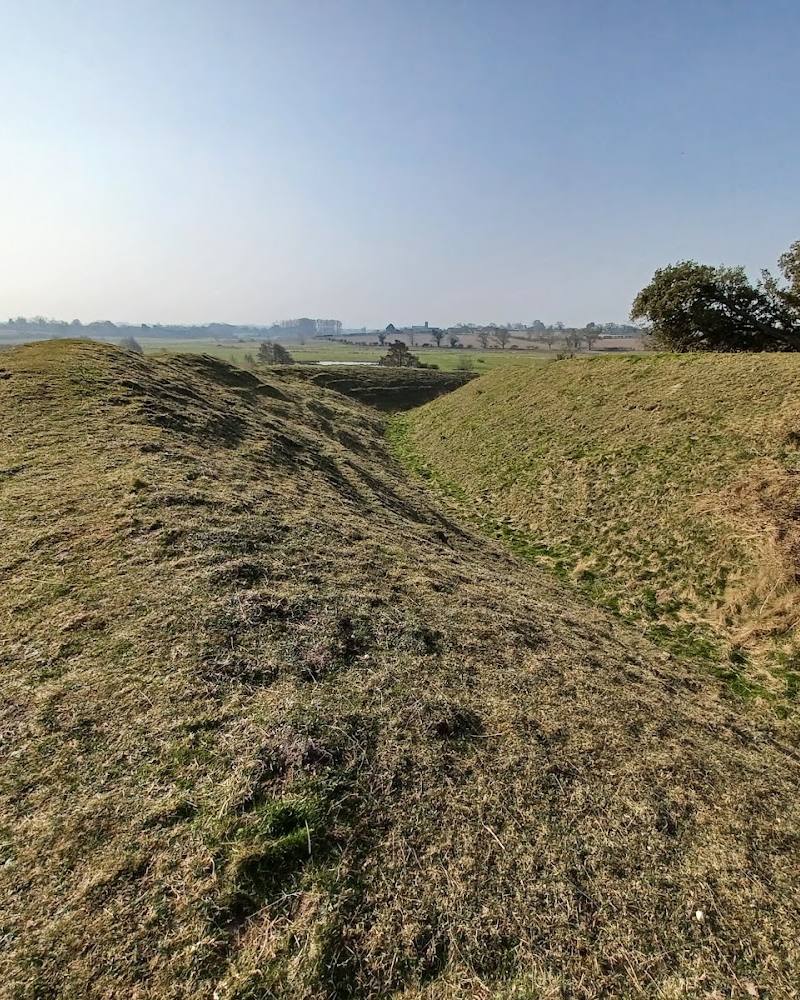
Walk where access permits and notice how the paired banks and ditches form a large enclosure. The site is reported to be about 212 metres across.
30–45 minutes
Look across the open countryside
The camp occupies a vantage point in the low-lying North Norfolk landscape. On a clear day, take in the surrounding farmland from the earthworks.
10–20 minutes
Notice the river-cut edge
The River Stiffkey now crosses the south-west edge of the enclosure. The river was rerouted in the eighteenth century, removing part of the outer bank.
Pair the visit with Warham village
The village guide identifies All Saints church and the Three Horseshoes as nearby stops. Check access, opening and current services before visiting.
Make a day of it
Quick escape · About 1–2 hours, including access on foot
Walk the ramparts
- 01
Confirm access and parking before travelling; the map pin marks the place, not the entrance.
- 02
Follow the established approach only if it is open and suitable for you; visitor accounts describe stiles and a grassy path.
- 03
Pause to read the double banks and ditches as a planned enclosure, then look across the surrounding countryside.
- 04
Keep to the existing path and leave the earthworks undisturbed.
Half day · Half day
Make a half day of Warham
- 01
Check access and parking for the camp in advance.
- 02
Explore the earthworks and take time to distinguish the banks, ditches and altered south-west edge.
- 03
Continue into Warham village for a locally researched pairing: All Saints church or the Three Horseshoes. Check opening and current visitor arrangements before relying on either.
- 04
Allow extra time for the village stops; do not assume the camp itself has facilities.
Verified history
Warham Camp is an Iron Age enclosure with two banks and two deep ditches. Archaeological investigations took place in 1914 and 1959, followed by a later project that included 24 trenches inside the enclosure and three examining the earthworks. The 2023 work recovered more than 3,500 finds, including pottery, animal bone, glass and worked flint. The researchers noted that the evidence does not suggest intensive Iron Age occupation; it also points to some metalworking during the third and fourth centuries AD. The construction date and the monument’s precise purpose remain under investigation. In the eighteenth century, the River Stiffkey was rerouted, cutting across the south-west edge and removing part of the outer bank.
Folklore & legend
No specific local legend is established by the supplied research. Do not present speculative stories about Boudica or the fort’s purpose as fact.
Hidden details
The enclosure is not quite a complete circle — The camp’s original circuit was altered when the River Stiffkey was rerouted in the eighteenth century. Look for the river-cut south-west edge rather than expecting an intact circular outline.
A quiet interior with a complicated past — The grass-covered interior can appear empty, but excavations have recovered evidence of Iron Age and Roman-period activity. Researchers caution that the site does not appear to have been intensively occupied in the Iron Age.
The 2023 excavation’s small finds — The excavation recovered thousands of finds, including pottery, glass, worked flint and animal bone. These are research discoveries, not objects visitors should expect to see in situ.
When to go
June · July · August · Choose a clear, calm period for countryside views; no specific time-of-day advantage is verified.
Visitor accounts mention flowers and butterflies in summer. The available evidence does not establish exact peak weeks, so treat this as a seasonal possibility rather than a guarantee.
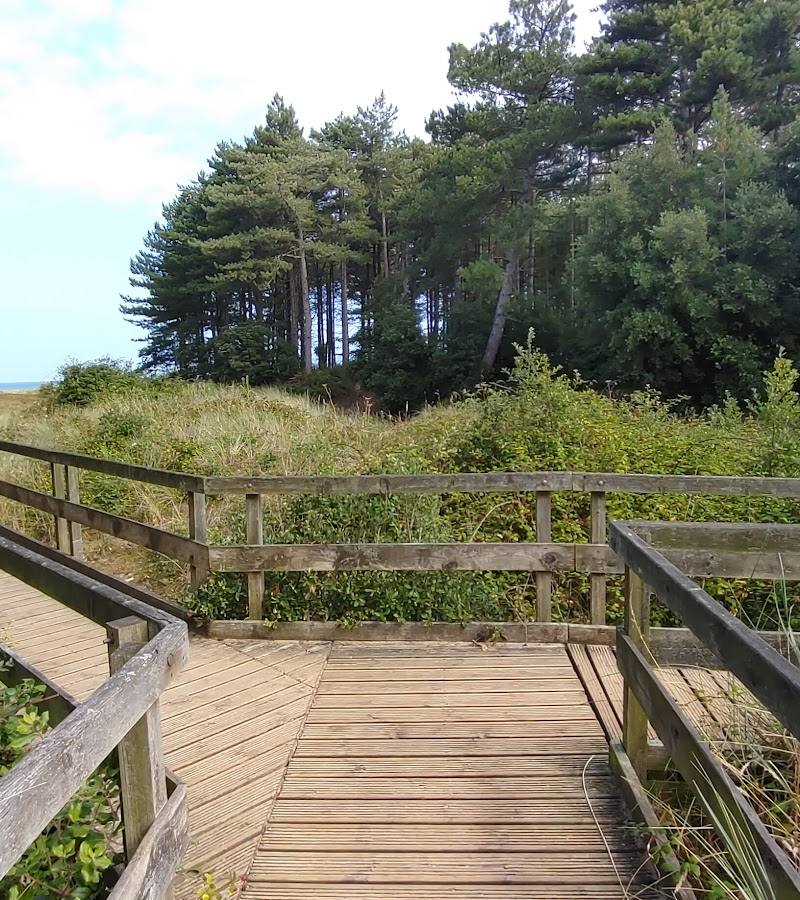
The approach is described by visitors as a grassy path with stiles and a slight slope. Check conditions after wet weather and confirm access before travelling.
Worth pairing with
All Saints, Warham
A nearby medieval parish church; the village guide describes surviving architectural features and interior fittings. Check current opening arrangements.
Three Horseshoes, Warham
A village pub identified by the local guide and a visitor account as a possible stop near the camp. Check opening, food service and parking directly before planning around it.
What to look for
Look for the concentric banks and ditches, the open interior, and the point where the River Stiffkey cuts across the south-west edge. The earthworks were altered when the river was diverted in the eighteenth century. Do not enter restricted or excavated areas.
The story
Iron Age earthworks; evidence of Iron Age and Roman-period activity
Best time to go
Summer is a good time to notice the reported grassland flowers and butterflies; check conditions before visiting in any season.
Choose a clear day for views across the surrounding countryside. Summer visitor accounts mention flowers and butterflies, but exact seasonal peaks are not established.
How long to spend
1–2 hours
Perfect for
History lovers · Walkers · Photographers
Before you go
Address
Phone
Website
Listed hours
- Monday: Open 24 hours
- Tuesday: Open 24 hours
- Wednesday: Open 24 hours
- Thursday: Open 24 hours
- Friday: Open 24 hours
- Saturday: Open 24 hours
- Sunday: Open 24 hours
Check before visiting.
Google rating
Practical information
Opening & access
Visitors describe access by a track and field entrance with stiles, followed by a grassy path up to the earthworks. The accepted map pin is not an entrance or parking point. Check current access and conditions before setting out. Access arrangements are unconfirmed. Check before visiting; do not enter private land or restricted structures.
Check before visiting
Parking
Parking details are not confirmed. A visitor account reports limited space near the entrance; do not assume roadside parking is available. Check before visiting.
Check before visiting
Toilets
Check before visiting
Check before visiting
Food & drink
Check before visiting
Check before visiting
Dogs
Check before visiting; a local guide advises keeping dogs on leads.
Check before visiting
Accessibility
Visitor accounts describe stiles and a grassy path with a slight slope. The source row reports no wheelchair-accessible car park or entrance. Check current conditions; access may not suit visitors who cannot use stiles.
Check before visiting
Cost
Check before visiting
Check before visiting
Water
River Stiffkey nearby
Gallery
Place photographsKeep exploring
Around Warham Camp Iron Age Fort
Within 50 km · approximate straight-line distances