Warham Road, Binham, near Fakenham, Norfolk NR21 0DQ
Binham Priory
Priory
Place photograph
7.8
Wildland
1–2 hours
Time
Check
Cost
Atmospheric
Feel
Why it's Wildland
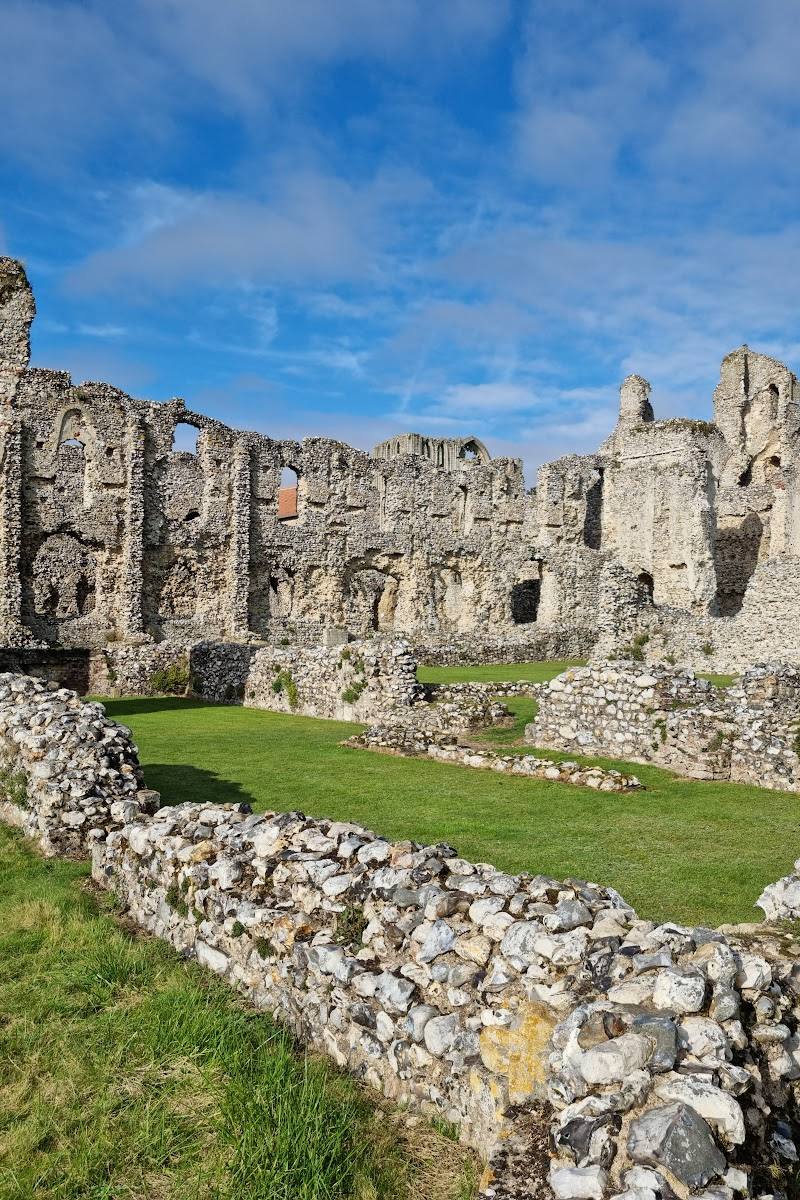
7.8Founded in 1091 by Peter des Valoines, a nephew of William the Conqueror, Binham Priory survives as a striking combination of active parish church and extensive monastic ruins.
Binham earns its place through the unusual scale and completeness of its Benedictine remains, set right beside a church that still preserves the priory’s nave, Norman arches and a medieval rood screen altered after the Reformation. It is a compact visit with substantial history underfoot.
Atmospheric · Ancient-feeling · Peaceful
Find your way
Open mapWarham Road, Binham, near Fakenham, Norfolk NR21 0DQ
Opening map…
Know this place a little better?
The experience
Allow about an hour for the ruins, with extra time to visit the adjacent church and stop at the café if open. Look closely at the church’s west front, Norman arches and altered medieval rood screen, then compare the surviving church with the scale of the ruins beyond.
Things to do
Walk among the priory ruins
Explore the extensive remains beyond the church; the ruins are open at reasonable times during daylight hours.
30–45 minutes
Look closely at the Priory Church
When open, see the 13th-century west front, tiers of Norman arches and former rood screen, whose medieval saints were overpainted with Protestant texts.
20–30 minutes
Arrange a guided visit
The official site says tours of the church and ruins can be arranged by appointment from May to September. Contact the church council using current details on the official page.
About 1 hour
Make a day of it
Quick escape · About 1 hour
Quick Escape: ruins and church
- 01
Enter the priory grounds and follow the path from the church towards the ruins.
- 02
Walk around the remains to take in their scale and surviving masonry.
- 03
Visit the adjacent Priory Church, if it is open, to see the west front, Norman arches and former rood screen.
Half day · 2–3 hours
Make a half day of it: monastery, church and a village stop
- 01
Explore the monastic ruins and compare their surviving remains with the scale of the former complex.
- 02
Visit the adjacent church, checking its seasonal opening hours first.
- 03
If open, take a break at The Parlour café or browse The Little Dairy Shop beside the car park.
Verified history
Binham Priory was founded in 1091 by Peter des Valoines, a nephew of William the Conqueror. The nave of the priory church, including its 13th-century west front and Norman arches, is now the parish church. Its former rood screen retains medieval saints overpainted with Protestant texts. The extensive ruins beyond the church show the former scale of the monastery. English Heritage describes the priory’s history as marked by scandal, but the supplied source excerpt does not detail individual incidents.
Hidden details
Saints beneath Protestant paint — Look at the former rood screen in the church: English Heritage notes that medieval saints were overpainted with Protestant texts.
A church that is part of the monastery’s story — The parish church is not simply beside the ruins: its nave is the surviving part of the priory church.
When to go
· Daylight hours; check the church’s seasonal opening times if you want to go inside.
The ruins are described as open during reasonable daylight hours throughout the year. No seasonal wildlife or landscape peak is evidenced in the supplied sources.
The official visitor information warns that paths can be uneven and slippery in wet weather.
Worth pairing with
The Parlour café
Listed by the official site beside the priory car park, serving breakfast, lunch and afternoon tea. Check current opening arrangements.
The Little Dairy Shop
The official site lists a shop beside the car park with vending machines selling local milk, cheese and butter; check availability before visiting.
What to look for
The 13th-century west front, tiers of Norman arches and the former rood screen with medieval saints overpainted with Protestant texts. Notice how the extensive ruins beyond the church reveal the original scale of the monastery.
The story
Benedictine monastic history; medieval church architecture; Reformation-era alteration of religious imagery.
Best time to go
Any season; choose a dry day if you want to explore the grass and gravel paths comfortably.
Visit during daylight for the ruins. The church has seasonal hours, so check the official opening information before setting out.
How long to spend
1–2 hours
Perfect for
History lovers · Photographers · Families
Before you go
Address
Phone
Website
Listed hours
- Monday: 10am-5pm
- Tuesday: 10am-5pm
- Wednesday: 10am-5pm
- Thursday: 10am-5pm
- Friday: 10am-5pm
- Saturday: 10am-5pm
- Sunday: 10am-5pm
Check before visiting.
Google rating
Practical information
Opening & access
The monastic ruins are open at reasonable times during daylight hours, with free entry. The adjacent Priory Church has separate seasonal opening hours; check the official page before visiting.
Check before visiting
Parking
A small car park is accessed through the priory gatehouse; the entrance is narrow. Check current parking arrangements before travelling.
Check before visiting
Toilets
Toilets are available in the church when it is open.
Food & drink
The official English Heritage page lists The Parlour café beside the car park, serving breakfast, lunch and afternoon tea, and The Little Dairy Shop. Check current opening arrangements before visiting.
Check before visiting
Dogs
Check current rules with the site or signage before visiting.
Check before visiting
Accessibility
The official page describes a step-free route to the ruins through an archway beside the church’s west front. A separate route includes three steps. Paths include gravel and closely mown grass; surfaces can be uneven or slippery when wet. The church has ramp or step access.
Cost
Free entry to the monastic ruins; verify current arrangements before visiting.
Check before visiting
Gallery
Place photographsKeep exploring
Around Binham Priory
Within 50 km · approximate straight-line distances
 Place photograph6.8
Creake Abbey
Burnham Road, North Creake, near Fakenham, Norfolk NR21 9LF
12.5 km away
 Place photograph7.2
Baconsthorpe Castle
Castle Lane, Baconsthorpe, near Holt, Norfolk NR25 6LL
14.0 km away