Money Close Lane, Heysham, near Morecambe, Lancashire, LA3 2UW
Heysham Nature Reserve
Mixed-habitat reserve
Place photograph
7.2
Wildland
1–2 hours
Time
Check
Cost
Peaceful
Feel
Why it's Wildland
7.2Warbler song, bee orchids and migrant birds beside Heysham docks.
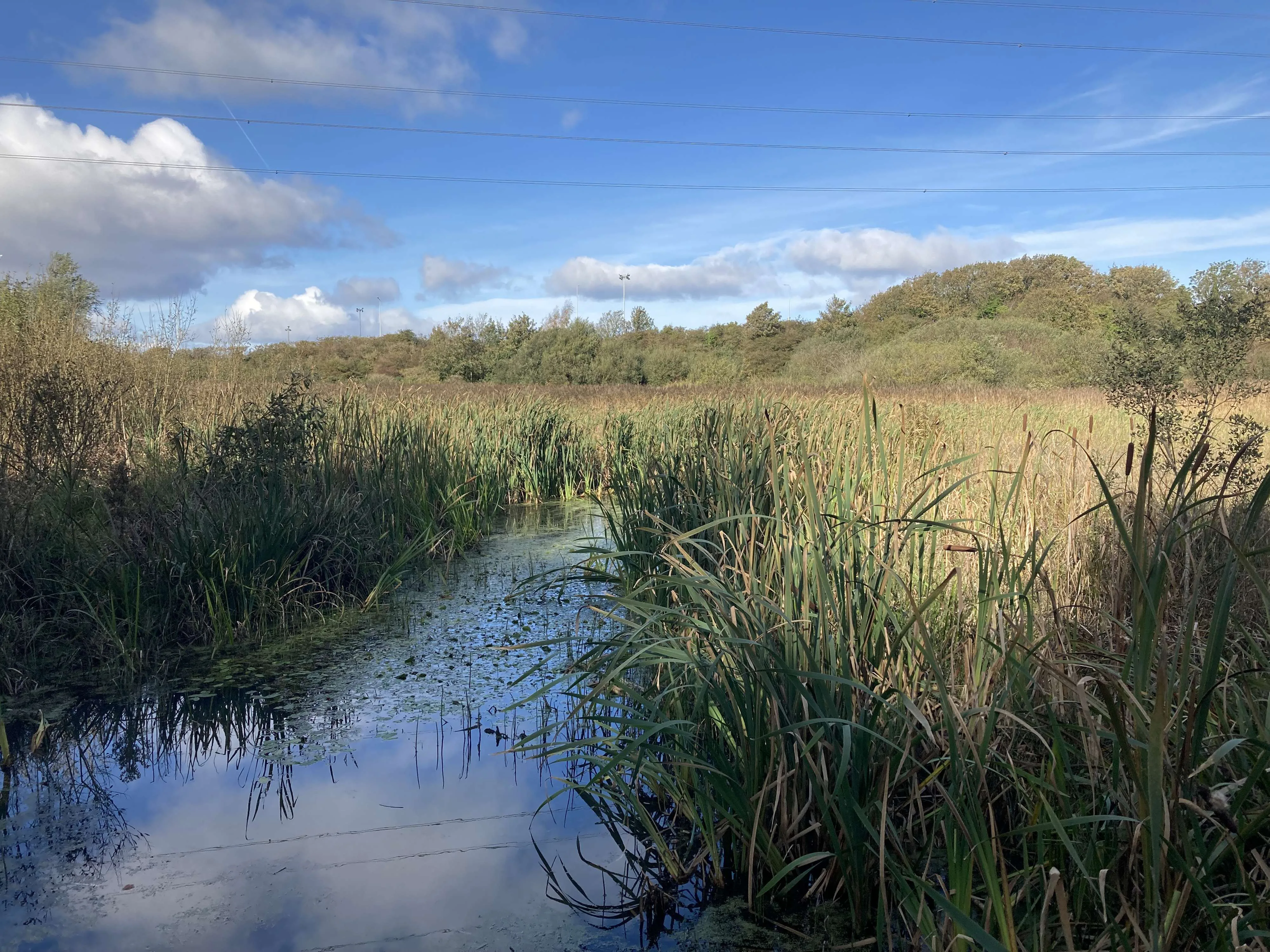
The surprise here is the wildlife, not an untouched setting. Beside busy Heysham docks, 21 hectares of reedbed, wetland and grassland support breeding warblers, bee orchids and a remarkable record of passing migrants. A rewarding place to slow down and look closely.
Peaceful
Find your way
Open mapMoney Close Lane, Heysham, near Morecambe, Lancashire, LA3 2UW
Opening map…
The experience
Follow the reserve footpaths through its changing habitats, pausing to listen around scrub and reedbeds. In April and May, give passing warblers time to reveal themselves; on sunny summer days, switch your attention to butterflies, burnet moths and flowers in the grassland.
Things to do
Listen for the spring warbler chorus
Take a slow footpath walk with regular listening stops. The Trust lists whitethroats, lesser whitethroats, chiffchaffs and willow warblers among breeding birds, with April and May especially important for migration.
45–90 minutes suggested
Look closely at the grassland's smaller wildlife
Look for small skipper, common blue and small copper butterflies, plus five- and six-spot burnet moths. The reserve's wildflowers include bee orchid and yellow-wort; view plants from the paths without trampling the vegetation.
30–60 minutes suggested
Watch the winter wetland edges
Spend time quietly scanning the wetland margins from the footpaths. Water rails, snipe and woodcock are listed by the Trust as winter wildlife; sightings are not guaranteed.
30–60 minutes suggested
Make a day of it
Quick escape · 1–2 hours suggested
Quick escape: a habitat-and-birdsong walk
- 01
Arrive at the on-site car park within its seasonal opening hours, or access the reserve on foot.
- 02
Use the reserve footpaths to explore the mix of grassland, scrub and wetland; this is a flexible visit rather than a prescribed circuit.
- 03
Pause near scrub and reedbeds to listen for warblers in spring and summer, or watch the water's edge for winter birds.
- 04
On a sunny day, spend part of the visit looking closely at grassland flowers and butterflies before returning.
Verified history
The reserve's best-documented story is its bird record. Lancashire Wildlife Trust lists a bee-eater in 1984, a woodchat shrike in 1989, a night heron and serin in 1990, and a wryneck in 2000. These are historical records, not birds to expect on an ordinary visit. Migration and ringing studies take place during the April–May peak, giving this small patch beside the docks a continuing role in understanding bird movements.
Hidden details
Two kinds of spotted burnet moth — The Trust records both five- and six-spot burnet moths here. Look closely at resting moths: distinguishing the spot patterns adds another layer to a summer grassland walk.
An autumn connection with Siberia — The Trust reports yellow-browed warblers from Siberia in most autumns with easterly winds. Treat them as a possible bonus for patient birdwatchers, not a promised encounter.
When to go
April · May · June · July · Morning suggested for a birdsong-led visit; a sunny spell for butterflies and moths.
April and May are documented migration peaks. Spring and summer bring breeding birds, wildflowers and insects; autumn migrants and winter wetland birds make return visits worthwhile.
Sunny conditions are recommended by the Trust for seeing butterflies and day-flying moths. Its autumn yellow-browed warbler records are associated with easterly winds. Plan vehicle visits around the seasonal car-park closing time.
What to look for
- 01
Bee orchids and yellow-wort among the grassland flowers
- 02
common blue and small copper butterflies
- 03
five- and six-spot burnet moths. Listen for whitethroats and willow warblers rather than expecting every bird to show itself.
Best time to go
April–May for spring migration; spring and summer for birdsong, wildflowers and insects.
April and May are the Trust's peak months for migrating birds. A morning visit is a good editorial choice for a listening-led walk; choose a sunny spell for insect watching. Autumn brings thrushes, while winter offers water rails, snipe and woodcock.
How long to spend
1–2 hours
Perfect for
Wildlife lovers · Photographers · Walkers
Practical information
Opening & access
Accessible on foot at all times. The on-site car park has seasonal opening hours. No dogs permitted on the reserve.
Parking
On-site car park open 7am–7pm April–October and 7am–4pm November–March. Foot access remains available outside these hours.
Toilets
The imported record reports no on-site toilets; nearby provision is inconsistent in that record. Check before visiting.
Check before visiting
Food & drink
Check before visiting
Check before visiting
Dogs
No dogs on the nature reserve because of sensitive wildlife. The Trust permits dog walking on the adjoining landscape strip leading to a separate nature park; consult the on-site map.
Accessibility
The Trust describes good footpaths but does not specify step-free routes or surfaces. The imported record claims some wheelchair- and pram-suitable paths; check before visiting.
Check before visiting
Cost
Check before visiting
Check before visiting
Gallery
Place photographsKeep exploring
Around Heysham Nature Reserve
Within 50 km · approximate straight-line distances
 Place photograph8.5
Warton Crag Local Nature Reserve
Crag Road, Warton, near Carnforth, Lancashire
14.8 km away
Arnside & Silverdale
Arnside and Silverdale, on the Lancashire–Cumbria border
15.9 km away
Hyning Scout Wood
Between Yealand Conyers and Warton, Arnside & Silverdale, Lancashire
16.4 km away