Postbridge, Yelverton, Dartmoor, Devon, PL20 6TH
Postbridge Clapper Bridge
Tiny historic site
Place photograph
5.7
Wildland
Under 1 hour
Time
Check
Cost
Atmospheric
Feel
Why it's Wildland
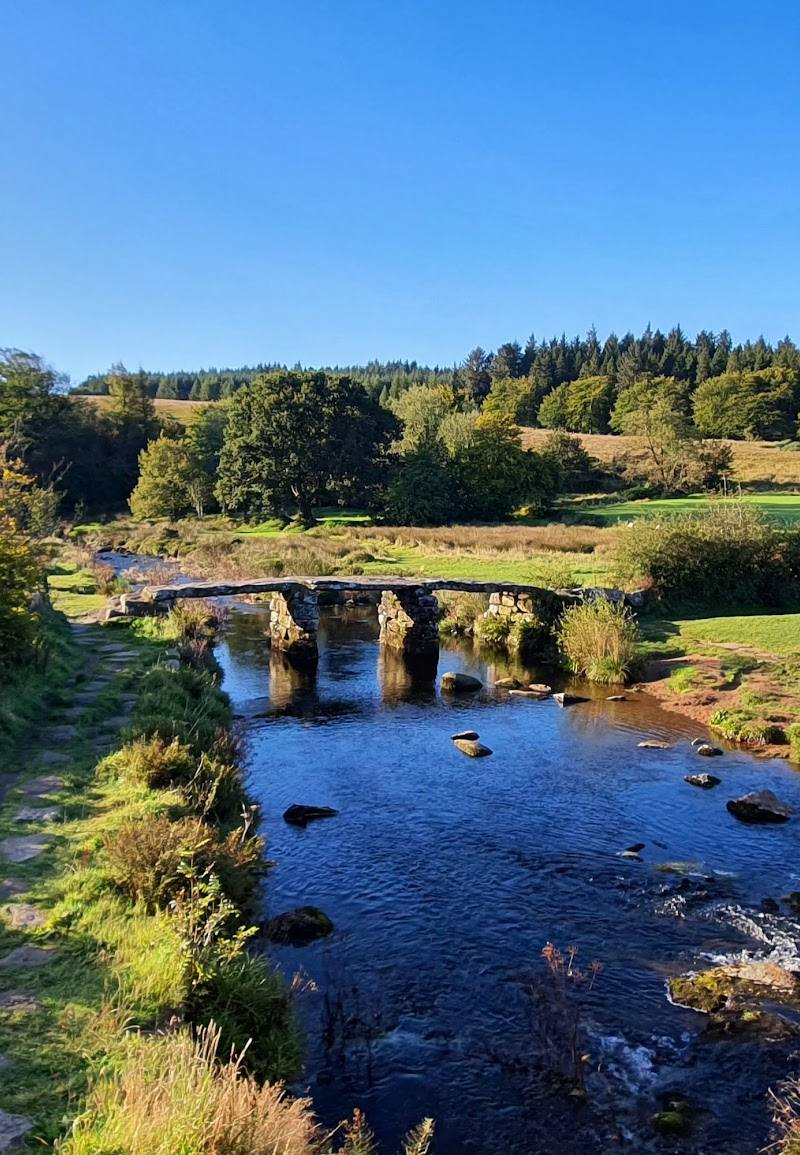
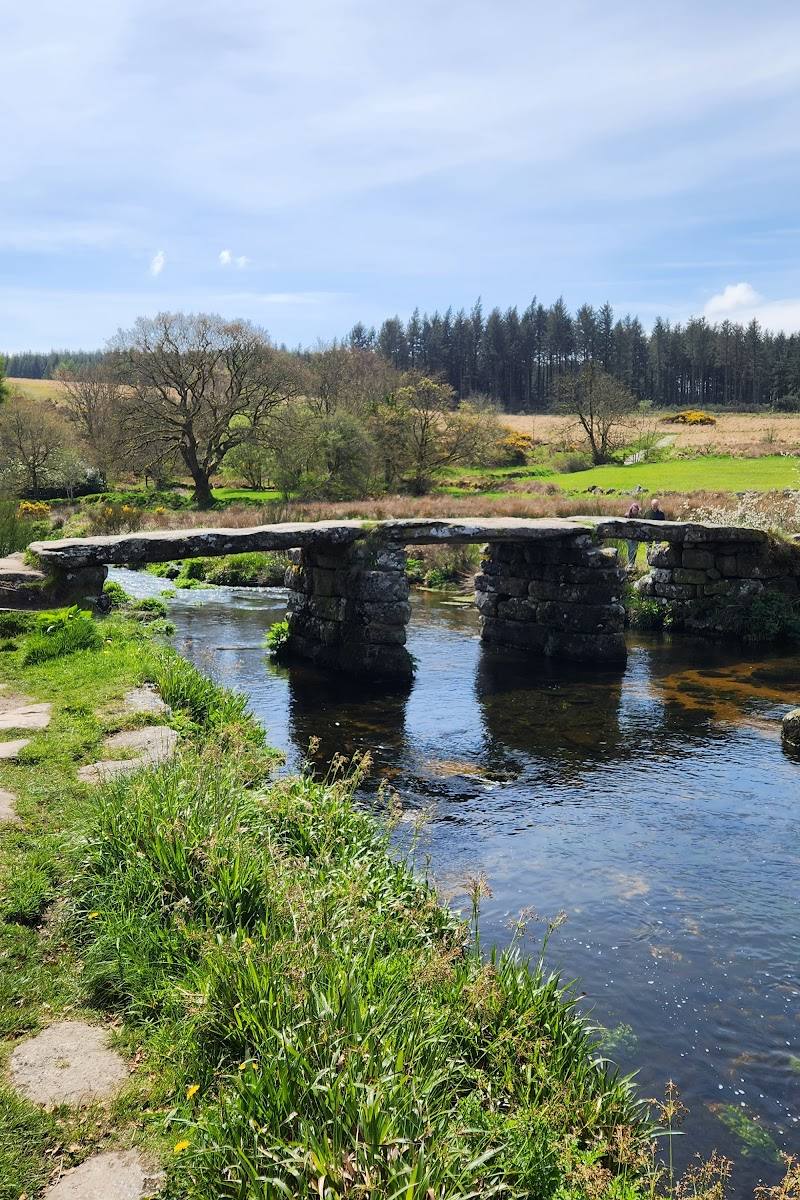
5.7Three great granite slabs span the East Dart on stone piers: a small, striking piece of medieval engineering in the Dartmoor landscape.
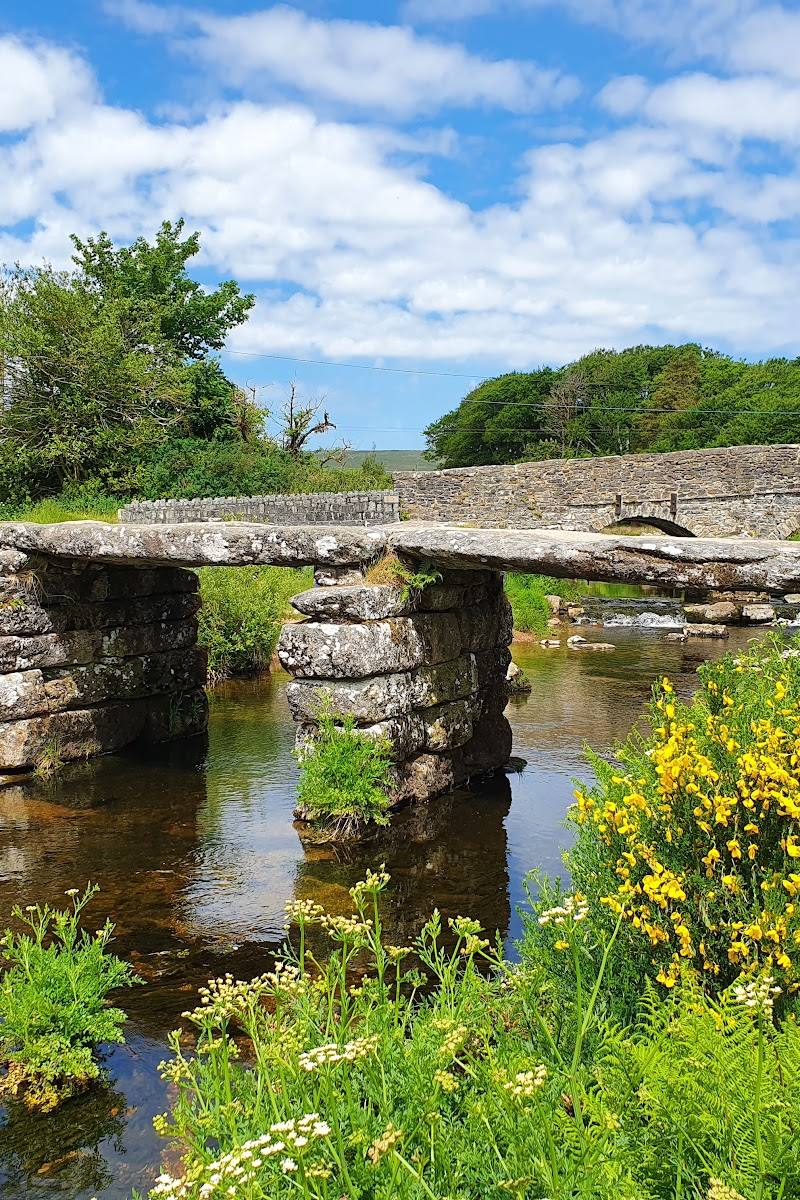
The bridge makes a brief visit feel like a meeting with Dartmoor’s working past: massive granite slabs cross the East Dart, with moorland and riverside walks close at hand. Its value is in the contrast between a compact historic landmark and the open landscape around it.
Atmospheric · Ancient-feeling
Find your way
Open mapPostbridge, Yelverton, Dartmoor, Devon, PL20 6TH
Opening map…
Know this place a little better?
The experience
A short visit to a medieval granite bridge over the East Dart, with time to view its construction, take in the river setting and, if conditions allow, follow a nearby riverside path.
Things to do
Study the granite clappers
Look at the large granite slabs and the stone piers that support them, then compare the old crossing with the modern road bridge nearby.
10–20 minutes
Take in the East Dart from the riverside
Enjoy the river setting and, where paths are open and conditions permit, follow a nearby riverside path. The supplied sources describe riverside walks but give no route distance or access details.
Photograph the bridge in its moorland setting
Frame the granite crossing with the East Dart and surrounding landscape; the bridge is specifically described as a photography spot.
10–20 minutes
Make a day of it
Quick escape · Under 1 hour
1 — Quick Escape: the clapper bridge
- 01
View the bridge beside the modern road bridge.
- 02
Look at how the granite slabs rest on stone piers.
- 03
Take in the East Dart setting and photograph the crossing.
- 04
Cross only if conditions feel safe; the stones may be slippery when wet.
Half day · Half day
2 — Make a half day of it: bridge and riverside
- 01
Start with the clapper bridge and take time to examine its granite construction.
- 02
Follow a nearby riverside path for a change of perspective on the East Dart.
- 03
Visit the Dartmoor National Park Visitor Centre, described by Visit Devon as a short walk away; check its current opening and facilities before setting out.
Verified history
The bridge is a medieval granite clapper bridge over the East Dart. Visit Devon dates it to the 13th century and describes it as a crossing built for packhorses and traders carrying goods, including tin. Tripadvisor’s supplied description says it was first recorded in 1380 and was probably built in the 13th century. Its surviving granite slabs and stone piers remain visible on site.
Hidden details
The crossing is made from slabs, not an arch — Look at the bridge from the side: its long granite clappers rest on stone piers rather than forming an arch.
When to go
April · May · June · July · August · September · A clear, dry morning for good visibility and firmer footing.
The bridge can be visited year-round, but dry conditions make its stone surface easier to negotiate and a clear day helps show the riverside setting.
The supplied Visit Devon listing warns that the stones can be slippery, especially in wet weather. Check conditions before crossing.
Worth pairing with
Dartmoor National Park Visitor Centre, Postbridge
Visit Devon says the centre is a short walk from the bridge and presents it as a place to learn about Dartmoor’s history, wildlife and conservation. Check current opening and facilities before visiting.
What to look for
Notice how the long granite slabs rest on separate stone piers, and compare the old crossing with the modern road bridge nearby. The supplied sources describe the bridge as a medieval crossing associated with packhorses and Dartmoor tin trading.
The story
Industry, Archaeology
Best time to go
Year-round; choose a dry, clear day for easier footing and views of the riverside setting.
A clear, dry morning is a good choice for seeing the granite and riverside setting. Take care on the stones, particularly after rain.
How long to spend
Under 1 hour
Perfect for
Photographers · History lovers · Walkers
Before you go
Address
Listed hours
- Monday: Open 24 hours
- Tuesday: Open 24 hours
- Wednesday: Open 24 hours
- Thursday: Open 24 hours
- Friday: Open 24 hours
- Saturday: Open 24 hours
- Sunday: Open 24 hours
Check before visiting.
Google rating
Practical information
Opening & access
The bridge is described as walkable and sits beside the modern road bridge. The supplied listing notes a wheelchair-accessible car park but says the entrance is not wheelchair accessible. Check current access and conditions before visiting; bridge stones may be slippery in wet weather.
Check before visiting
Parking
The supplied Visit Devon listing says parking is near the bridge and describes it as easy. Check current arrangements before travelling.
Check before visiting
Toilets
Check before visiting.
Check before visiting
Food & drink
Check before visiting.
Check before visiting
Dogs
Check before visiting.
Check before visiting
Accessibility
The source row reports a wheelchair-accessible car park and a non-wheelchair-accessible entrance. The bridge surface may be slippery in wet weather; check conditions before crossing.
Check before visiting
Cost
Check before visiting
Check before visiting
Water
River
Gallery
Place photographsKeep exploring
Around Postbridge Clapper Bridge
Within 50 km · approximate straight-line distances