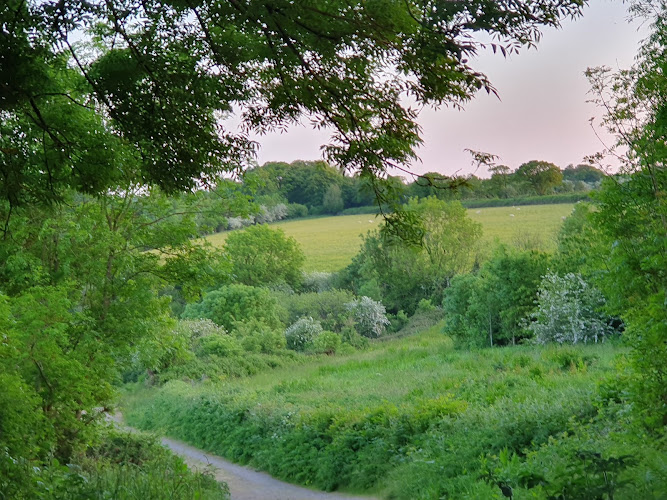
Near Seaton and Colyford, East Devon
Holyford Woods Local Nature Reserve
Mixed-habitat reserve
Source image
7.0
Wildland
1–2 hours
Time
Free
Cost
Peaceful
Feel
Why it's Wildland
7.0A sunken stream, known locally as a goyle, runs through this East Devon woodland before feeding Stafford Brook on its way towards the Axe Estuary. The woods’ oak, ash and hazel have provided habitat for more than 400 years.
Holyford Woods earns its place for more than spring bluebells: a stream-cut woodland valley supports old woodland habitat and a remarkable range of wildlife, including rare bats and dormice. Expect steep, uneven paths rather than an easy-access stroll.
Peaceful · Secluded · Ancient-feeling · Wild
Find your way
Open mapNear Seaton and Colyford, East Devon
Opening map…
The experience
A short woodland visit with a distinctive stream-cut valley and strong wildlife interest. Take the signed path into the woods, look for the goyle and woodland birds, and allow time for a slow return. Paths can be steep, uneven and muddy.
Things to do
Follow the signed woodland paths
Explore the reserve on its paths and bridleways. The ground is steep and uneven and may be muddy after rain; wheelchair access is unsuitable.
1–2 hours
Find the goyle
Look for the sunken stream that runs through the heart of the woodland and feeds Stafford Brook.
Look and listen for woodland wildlife
The woods provide habitat for birds including tawny owls, grey wagtails and long-tailed tits, as well as bats, dormice, roe deer, badgers and weasels. Sightings are not guaranteed.
Visit for the spring flowers
Look for bluebells, wild garlic, red campions and foxgloves, particularly in late April and early May.
Make a day of it
Quick escape · 1–2 hours
Quick woodland escape
- 01
Park at the Seaton Down picnic site and cross the A3052 carefully to the signed footpath.
- 02
Follow the paths into Holyford Woods, taking care on steep or uneven ground.
- 03
Look for the sunken stream (goyle) and pause to listen for woodland birds.
- 04
Return the same way; paths may be muddy after rain.
Half day · Half day
Spring flowers and woodland wildlife
- 01
Visit in late April or early May for bluebells, wild garlic, red campions and foxgloves.
- 02
Walk the signed paths at a comfortable pace, allowing extra time for the steep and uneven sections.
- 03
Look and listen for woodland birds, and watch for signs of the reserve’s other wildlife without disturbing it.
- 04
Use the benches for a rest and bring refreshments; no café is listed in the supplied sources.
Verified history
The supplied source describes parts of the site as having been woodland for more than 400 years. It also says the site is managed by East Devon District Council’s Countryside Team in partnership with the Axe Vale & District Conservation Society. No more specific historical dates or events are evidenced here.
Hidden details
The goyle is a sunken stream — The local name for the sunken stream running through the woodland is “goyle”. It feeds Stafford Brook, which flows towards the Axe Estuary.
Old trees provide wildlife habitat — Oak, ash and hazel in the woods provide nesting sites for birds and habitat for bats, including the rare Barbastelle and Bechstein’s bats, according to the reserve’s visitor information.
When to go
April · May · October · No specific time of day is evidenced; choose a dry spell for better path conditions.
Late April and early May are highlighted for bluebells, wild garlic and other native flowers. Autumn brings changing leaf colour. Paths can be muddy after rain.
Sturdy boots or wellies are recommended. The steep, uneven paths can become muddy after rain.
What to look for
- 01
Find the goyle, the sunken stream running through the heart of the wood. Look for oak, ash and hazel, and listen for woodland birds
- 02
the reserve is also home to bats, dormice and roe deer.
The story
Woodland habitat present for more than 400 years; no specific historical events or folklore verified in the supplied sources.
Best time to go
Late April to early May for bluebells, wild garlic and other spring flowers; autumn for changing leaf colour.
Late April and early May bring bluebells, wild garlic, red campions and foxgloves. Visit after a dry spell if you want firmer footing; autumn offers changing leaf colour.
How long to spend
1–2 hours
Perfect for
Walkers · Families · Wildlife lovers · Photographers · Dogs
Practical information
Opening & access
Open to the public free of charge year-round. The signed footpath is reached by carefully crossing the A3052 from the Seaton Down picnic site. Paths are steep and uneven, and can be muddy after rain.
Parking
Parking is available at the Seaton Down picnic site opposite Seaton Tower Garage on Seaton Down Hill Road; nearest postcode EX12 2TF. Cross the A3052 carefully to reach the signed footpath.
Toilets
No toilets are listed in the supplied sources; check before visiting.
Check before visiting
Food & drink
No café is listed in the supplied sources; bring refreshments or check locally before visiting.
Check before visiting
Dogs
Dogs are welcome but must be kept under close control; clean up after them.
Accessibility
Steep gradients and uneven paths and bridleways make the reserve unsuitable for wheelchair access. Sturdy boots or wellies are recommended, especially after rain.
Cost
Free
Water
A sunken stream (goyle) runs through the woodland and feeds Stafford Brook. No evidence of permission for swimming or paddling.
Gallery
Place photographsKeep exploring
Around Holyford Woods Local Nature Reserve
Within 50 km · approximate straight-line distances