7.3
Wildland
Under 1 hour
Time
Free
Cost
Atmospheric
Feel
Why it's Wildland
7.3For four centuries, Thetford Priory was the burial place of the Earls and Dukes of Norfolk. Its surviving gatehouse, church and cloister walls, and the shell of the prior’s lodging make that former power visible in the heart of Thetford.
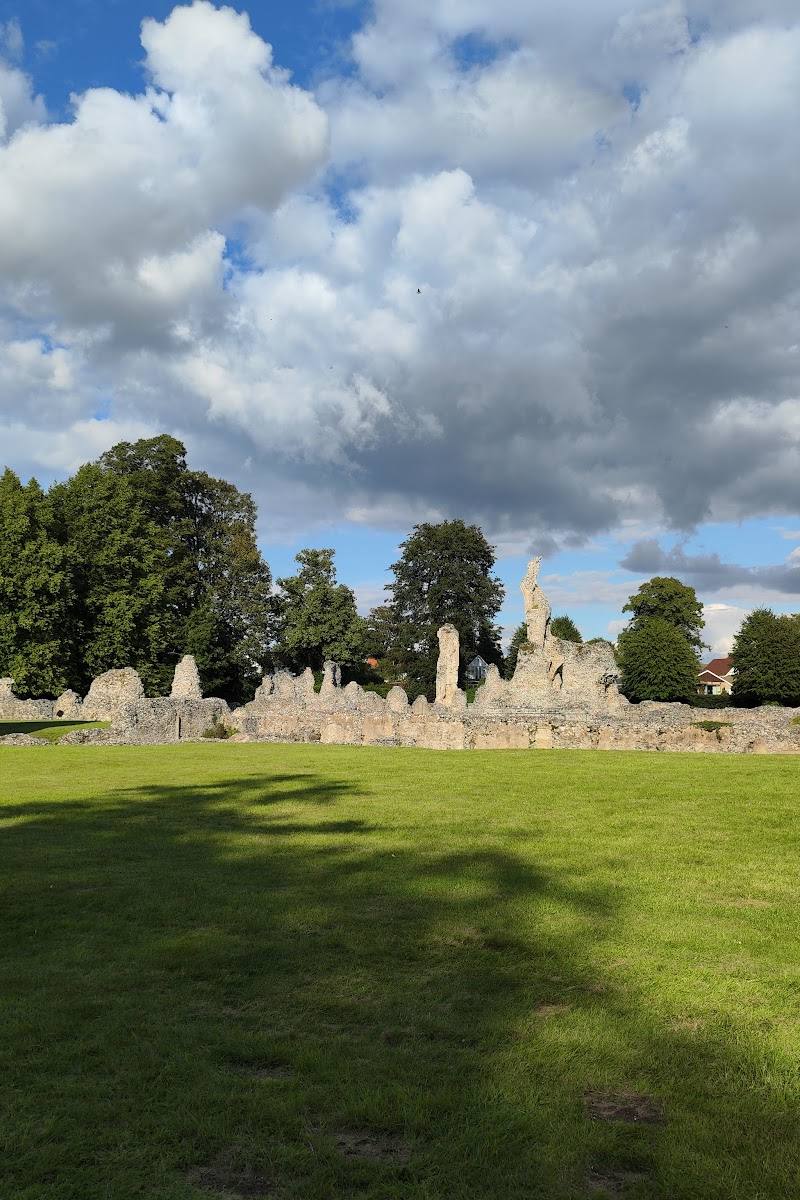
This is a substantial medieval monastic ruin with a rare sense of continuity: the gatehouse still stands almost complete, while the church and cloister survive at ground level. It earns its place for the scale of the remains and the unusually clear story of a monastery protected by the powerful Norfolk family.
Atmospheric · Historic
Find your way
Open mapWater Lane, Thetford, Norfolk IP24 1BB
Opening map…
Know this place a little better?
The experience
Allow a short visit to explore the extensive ruins. Take in the almost complete 14th-century gatehouse, then look across the lower church and cloister walls and the shell of the prior’s lodging. The site has uneven ground and falling-masonry warnings; stay on visitor paths and do not climb the ruins.
Things to do
See the 14th-century gatehouse
Look closely at the priory’s almost complete gatehouse, one of the most prominent surviving structures.
Allow time within a short site visit
Trace the church and cloister remains
Follow the visitor path to see the lower walls that mark the former church and cloister.
Allow time within a short site visit
Look for the prior’s lodging
Find the surviving shell of the prior’s lodging among the extensive remains.
Allow time within a short site visit
Make a day of it
Quick escape · Under 1 hour
Quick Escape: the gatehouse and priory ruins
- 01
Enter from the site entrance and follow the main path.
- 02
Start with the almost complete 14th-century gatehouse.
- 03
Continue to view the remains of the church and cloister and the shell of the prior’s lodging.
- 04
Stay on visitor paths and do not climb the ruins.
Verified history
The Priory of Our Lady of Thetford was founded in the early 12th century and became one of medieval East Anglia’s largest and most important monasteries. For around 400 years it served as the burial place of the Earls and Dukes of Norfolk, whose protection helped it remain until late in the Dissolution of the Monasteries. It surrendered to Henry VIII’s commissioners in 1540. The surviving remains include the lower walls of the church and cloister, the shell of the prior’s lodging and an almost complete 14th-century gatehouse.
Hidden details
The priory’s powerful patrons — The site was the burial place of the Earls and Dukes of Norfolk for around four centuries. This connection helps explain why it was among the last monasteries to surrender, in 1540.
A gatehouse that still reads as a building — Among the dispersed lower walls and ruined lodging, the almost complete 14th-century gatehouse remains a particularly legible structure.
When to go
· No particular time of day is evidenced. Check current opening information before visiting.
The supplied official information describes the priory as open throughout the year but does not identify a seasonal highlight.
The main path is surfaced, while other areas are over closely mown grass. English Heritage flags uneven surfaces and falling masonry; take care in wet or poor conditions and follow site guidance.
What to look for
Look for the contrast between the almost complete 14th-century gatehouse and the lower surviving walls of the church and cloister. The shell of the prior’s lodging is another key remnant. Keep clear of the ruins: English Heritage warns of falling masonry and prohibits climbing.
The story
Medieval monastic life; the Earls and Dukes of Norfolk; the Dissolution of the Monasteries
Best time to go
Open year-round according to English Heritage; no particular seasonal advantage is established by the supplied evidence.
No evidence establishes a best season or time of day. Check English Heritage’s current opening information before setting out.
How long to spend
Under 1 hour
Perfect for
History lovers · Walkers · Photographers
Before you go
Address
Phone
Website
Listed hours
- Monday: 10am-6pm
- Tuesday: 10am-6pm
- Wednesday: 10am-3pm
- Thursday: 10am-6pm
- Friday: 10am-6pm
- Saturday: 10am-6pm
- Sunday: 10am-6pm
Check before visiting.
Google rating
Practical information
Opening & access
English Heritage lists the priory as open daily with free entry. Its visitor information gives current hours as 11am–3pm daily, except Christmas Day; check the official page before travelling because the page also displays different general hours.
Check before visiting
Parking
English Heritage reports a small free car park near the site entrance; it is not managed by English Heritage. Check availability before visiting.
Check before visiting
Toilets
No facilities at the priory, according to English Heritage. Public toilets are reported nearby in Thetford; check availability.
Check before visiting
Food & drink
No on-site food information supplied. English Heritage says places to eat are available near Thetford town centre.
Dogs
Dogs on leads are welcome, according to English Heritage.
Accessibility
English Heritage says the main path through the site is surfaced and suitable for buggies and wheelchairs; other areas are reached over closely mown grass. The source row also reports a wheelchair-accessible entrance and car park. Uneven surfaces and falling masonry are flagged; do not climb the ruins.
Cost
Free
Gallery
Place photographs

Keep exploring
Around Thetford Priory
Within 50 km · approximate straight-line distances
 Place photograph8.7
Forest Lodge Holidays
Little Lodge Farm, Santon Downham, Brandon, IP27 0TX
4.6 km away
 Place photograph8.5
Forest Holidays Thorpe Forest
Shadwell, near Thetford, Norfolk IP24 2RX
8.0 km away
 Source image8.2
Grime’s Graves Prehistoric Flint Mine
Lynford, near Thetford, Norfolk IP26 5DE
8.1 km away