Shingrig, St Dogmaels, near Cardigan, SA43 3DX
St Dogmaels Abbey
Abbey
Place photograph
7.2
Wildland
1–2 hours
Time
Check
Cost
Atmospheric
Feel
Why it's Wildland
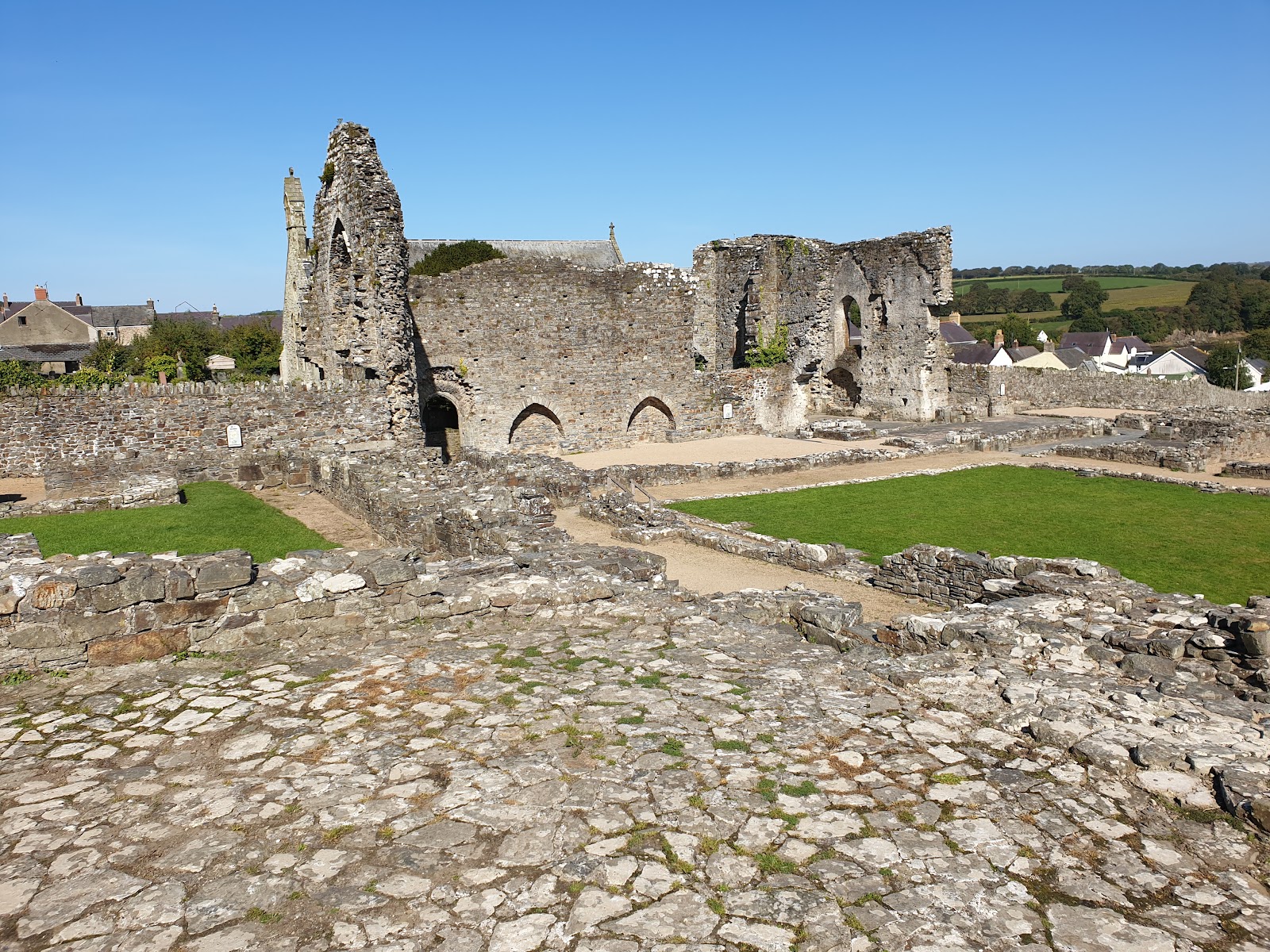
7.2Founded in 1120 on the site of an earlier pre-Norman church, St Dogmaels grew into a significant religious settlement. Its surviving walls span centuries of building, from 12th-century church and cloister remains to a Tudor-period transept.
This is more than a picturesque ruin: St Dogmaels preserves a long, visible sequence of monastic architecture, with a museum and reconstructed view of the abbey at its 15th-century peak in the adjacent Coach House. Its village setting also offers a well-sourced way to extend a visit towards the Teifi and the historic watermill.
Atmospheric · Ancient-feeling
Find your way
Open mapShingrig, St Dogmaels, near Cardigan, SA43 3DX
Opening map…
Know this place a little better?
The experience
Explore the abbey ruins, then use the adjacent Coach House museum and its computer-generated reconstruction to connect the surviving stonework with the settlement’s history. The site can also anchor a longer village walk or a visit to nearby Y Felin watermill.
Things to do
Trace the abbey’s building phases
Compare the 12th-century church and cloister elements with the 13th-century nave walls, 14th-century north doorway and Tudor-period transept.
20–40 minutes
See the Coach House museum and abbey reconstruction
The adjacent visitor centre houses carved stones and artefacts and has a computer-generated reconstruction of the abbey at its 15th-century peak. Check opening times before visiting.
Visit Y Felin watermill
The Wales Coast Path itinerary describes Y Felin, across the road from the abbey, as a working watermill with medieval foundations and tours available. Check the mill’s own information for current tour arrangements.
Walk a published St Dogmaels circular route
The Wales Coast Path lists two circular options starting and finishing at the abbey: 8.5 miles and 11 miles. Consult the official itinerary for the route details before setting off.
Full day
Make a day of it
Quick escape · About 1 hour
Quick visit: read the abbey in its stonework
- 01
Visit the abbey ruins during reasonable daylight hours.
- 02
Look for the different building periods: 12th-century church and cloister elements, 13th-century nave walls, the 14th-century north doorway and the Tudor-period transept.
- 03
If open, visit the adjacent Coach House museum to see abbey artefacts and its reconstruction of the site at its 15th-century peak.
Half day · Half day
Make a half day of it: abbey, village and watermill
- 01
Explore the abbey ruins and, if open, the Coach House museum and visitor centre.
- 02
Continue through St Dogmaels using the Wales Coast Path itinerary’s village route.
- 03
Visit Y Felin, the working watermill across the road from the abbey; check its own visitor information for tour availability.
- 04
Use the Coach House café if open, checking its website before travelling.
Full Wildland day · Full day
A longer day on the St Dogmaels circular walks
- 01
Start and finish at St Dogmaels Abbey, as specified by the Wales Coast Path itinerary.
- 02
Choose one of the published circular routes: 8.5 miles or 11 miles.
- 03
Explore the abbey and village before or after the walk; the itinerary also mentions the Coach House café, Y Felin watermill and the Pembrokeshire Coast Path.
- 04
Check the full route description, conditions and opening times before setting out.
Verified history
Cadw states that the abbey was founded in 1120 on the site of an earlier pre-Norman church. The surviving remains span four centuries of monastic life: church and cloister elements date to the 12th century; the tall west and north nave walls are 13th-century; the north doorway has 14th-century decoration; and the north transept was built in the Tudor period. The adjacent Coach House museum presents artefacts relating to the abbey and the area, alongside a reconstruction of the abbey at its 15th-century peak. The Wales Coast Path itinerary records that the abbey’s income included gardens, orchards, anchorage rights, mills, rents and fishing, especially herring.
Hidden details
The doorway spans another century — Look for the north doorway’s 14th-century decoration, distinct from the earlier church and later Tudor-period transept.
The abbey’s working landscape — The Wales Coast Path account links the abbey’s livelihood with gardens, orchards, anchorage rights, mills, rent and fishing, especially herring.
When to go
· During reasonable daylight hours; no more specific preferred time is established by the supplied sources.
Cadw lists the ruins as open all year during reasonable daylight hours. The supplied sources do not establish a season-specific advantage.
Check conditions before walking the longer circular routes. The supplied sources do not provide site-specific weather guidance.
Worth pairing with
Y Felin watermill
A working watermill across the road from the abbey, described by the Wales Coast Path itinerary as having medieval foundations; tours are available, but check current arrangements.
St Dogmaels circular walks
The Wales Coast Path publishes two circular walks starting and finishing at the abbey, of 8.5 and 11 miles.
What to look for
Look for the 12th-century church and cloister remains, the tall 13th-century west and north nave walls, the decorated 14th-century north doorway, and the Tudor-period north transept.
The story
Monastic history, medieval architecture, Christian heritage
Best time to go
Open all year during reasonable daylight hours; check the Coach House website for visitor-centre and café opening times.
Visit during reasonable daylight hours. The ruins are listed as open all year; the independently managed Coach House has separate opening times, so check ahead if you want to use the museum or café.
How long to spend
1–2 hours
Perfect for
History lovers · Families · Walkers
Before you go
Address
Phone
Website
Listed hours
- Monday: 10am-4pm
- Tuesday: 9:30am-4pm
- Wednesday: 10am-4pm
- Thursday: 10am-4pm
- Friday: 10am-4pm
- Saturday: 10am-4pm
- Sunday: Closed
Check before visiting.
Google rating
Practical information
Opening & access
Cadw lists the abbey ruins as open all year during reasonable daylight hours. The ruins are close to the car park. Check the Coach House website for its separate opening times.
Check before visiting
Parking
Cadw lists free visitor car parking. The Wales Coast Path itinerary also identifies a village car park; confirm the appropriate parking location before setting out.
Toilets
Visitor toilets, including accessible toilets, are listed by Cadw.
Food & drink
The adjacent Coach House visitor centre has a café, according to its website. Check its website for current opening times.
Check before visiting
Dogs
Cadw lists dogs as welcome.
Accessibility
Cadw describes the site as mostly sloping. Access is generally good for walkers but can be difficult for wheelchair users; the ruins are within 100 metres of the parking area. Cadw lists disabled access and accessible toilets.
Cost
Free entry to the ruins is reported by the supplied Tripadvisor source; verify current charges and any separate visitor-centre costs before visiting.
Check before visiting
Water
River Teifi nearby; no water activity permission established.
Gallery
Place photographsKeep exploring
Around St Dogmaels Abbey
Within 50 km · approximate straight-line distances
 Source image7.4
Waun Mawn Standing Stones
Waun Mawn, near Crymych, Pembrokeshire, SA41 3TU
14.3 km away
 Place photograph8.7
Florence Springs Luxury Lakeside Lodges
St Florence, near Tenby, Pembrokeshire SA70 8RJ
43.9 km away
 Place photograph7.5
St Non’s Chapel and Well
St Non’s, near St Davids, Pembrokeshire, SA62 6BN
46.5 km away