4.5
Wildland
1–2 hours
Time
Check
Cost
Peaceful
Feel
Why it's Wildland
4.5West Ham Park’s ornamental garden grew from the Upton House estate, where eighteenth-century physician and plant collector Dr John Fothergill developed a botanical garden. Its history is still legible in the trees and garden features.
This is a substantial green space with more than open lawns: its ornamental garden carries the story of an eighteenth-century botanical collection, including a ginkgo said by the local heritage account to have been planted in 1763. The park’s history and mature planting offer a worthwhile change of pace within east London.
Peaceful · Atmospheric
Find your way
Open mapWest Ham Park, Upton Lane, London E7 9PU
Opening map…
Know this place a little better?
The experience
Explore the ornamental garden at an unhurried pace, look for the park’s notable trees and find the cairn associated with the former Ham House site. The imported name suggests a walking trail, but the supplied evidence does not verify a distinct route or its geometry.
Things to do
Explore the ornamental garden
Visit the garden associated with Dr John Fothergill’s eighteenth-century botanical collection.
Check before visiting
Look for the notable trees
The local heritage account identifies a ginkgo, monkey puzzle and yucca among the park’s notable trees. It says the ginkgo was planted by Fothergill in 1763.
Find the Ham House cairn
Ham House, formerly Upton House, was demolished in 1872; the heritage account identifies a cairn in the ornamental garden as a surviving reminder of the site.
Make a day of it
Quick escape · 1–2 hours
A short garden-and-trees wander
- 01
Enter West Ham Park and make for the ornamental garden.
- 02
Look for the notable trees mentioned in the local heritage account, including the ginkgo, monkey puzzle and yucca.
- 03
Find the cairn associated with the former Ham House site.
Half day · Half day
Give the park’s history more time
- 01
Explore the ornamental garden and look for its notable trees.
- 02
Pause at the cairn marking the site of the former Ham House.
- 03
Continue exploring the park at your own pace; check current facilities and access information before setting out.
Verified history
West Ham Park’s history is tied to the Upton House estate. The local heritage account describes Dr John Fothergill’s ornamental botanical garden, begun in the 1760s, and says a ginkgo was planted there in 1763. Ham House, formerly Upton House, was demolished in 1872; a cairn in the ornamental garden is identified as a remnant of its site. The City of London Corporation manages West Ham Park.
Hidden details
The Ham House cairn — Look in the ornamental garden for the cairn associated with the former Ham House, demolished in 1872.
Fothergill’s ginkgo — The local heritage account says this ginkgo was planted by Dr John Fothergill in 1763 and describes it as one of the oldest living ginkgo trees in the UK.
When to go
· No particular time of day is supported by the supplied sources.
The supplied sources do not establish a best season or specific seasonal display.
Check current conditions and park information before visiting.
What to look for
Look for the ginkgo described by the local heritage account as planted by Dr John Fothergill in 1763, the monkey puzzle and yucca, and the cairn marking the site of the former Ham House.
The story
Historic estate, botanical garden and notable trees
Best time to go
Check locally for seasonal planting and current park conditions.
No specific seasonal peak is confirmed in the supplied sources. Check locally for current garden conditions and seasonal interest.
How long to spend
1–2 hours
Perfect for
Walkers · Photographers · History lovers
Before you go
Practical information
Opening & access
The park is managed for public use. Check the official park page for current access arrangements before visiting.
Check before visiting
Parking
Check before visiting.
Check before visiting
Toilets
Check before visiting.
Check before visiting
Food & drink
Check before visiting.
Check before visiting
Dogs
Check before visiting.
Check before visiting
Accessibility
The supplied park information indicates a wheelchair-accessible entrance. This does not confirm that every path or garden area is accessible; check current conditions before visiting.
Check before visiting
Cost
Check before visiting
Check before visiting
Water
Pond
Gallery
Place photographs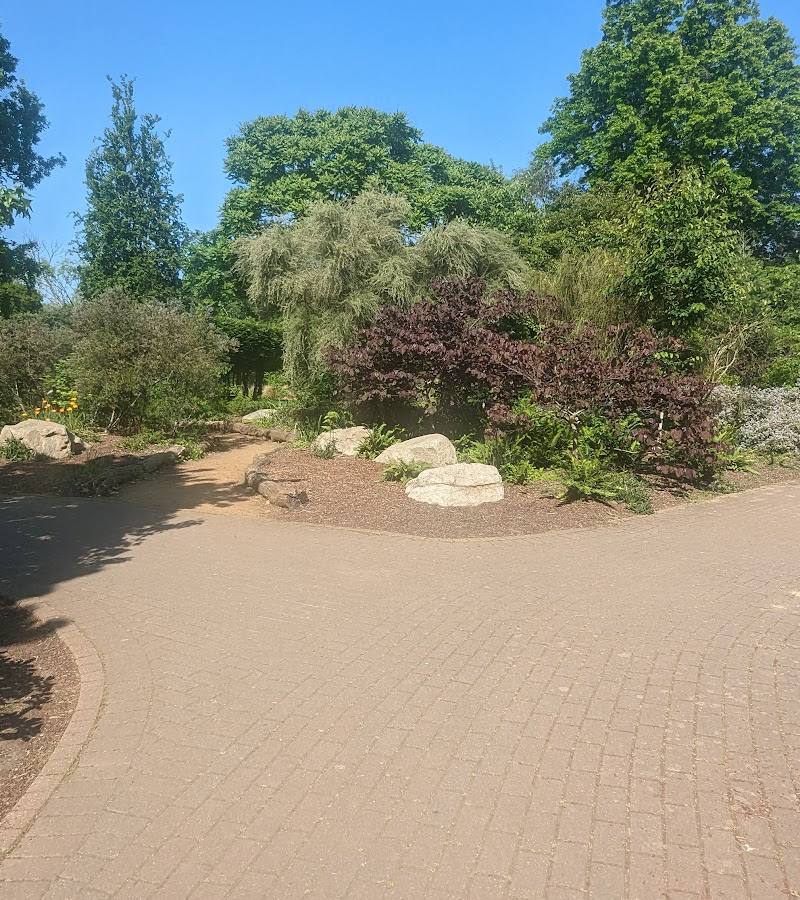
Keep exploring
Around West Ham Park
Within 50 km · approximate straight-line distances