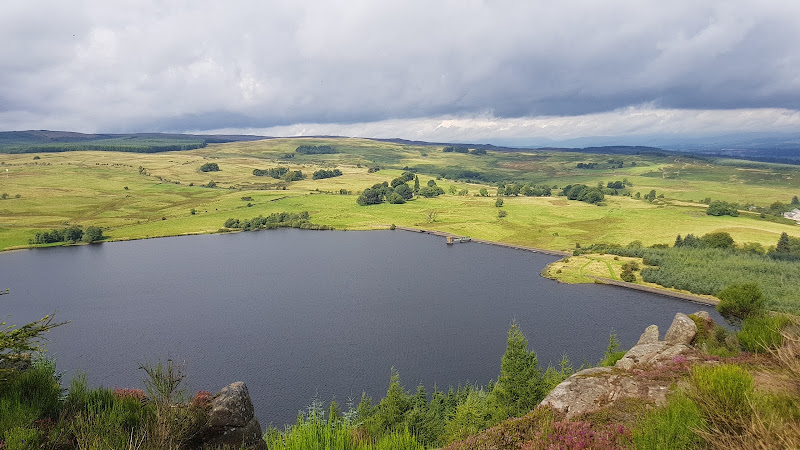
Carse of Stirling, near Thornhill, Stirlingshire
Flanders Moss National Nature Reserve
Bog
Place photograph
8.5
Wildland
1–2 hours
Time
Check
Cost
Big-sky
Feel
Why it's Wildland
8.5Thousands of years of moss growth have raised this bog above the surrounding floodplain.
The car park is only the gateway: beyond it lies one of Britain's largest and least damaged lowland raised bogs. A short boardwalk brings you close to coloured sphagnum, basking lizards and dragonflies, while the viewing tower reveals the scale of the landscape.
Big-sky · Wild · Peaceful
Find your way
Open mapCarse of Stirling, near Thornhill, Stirlingshire
Opening map…
Know this place a little better?
The experience
Follow the circular boardwalk slowly rather than treating it as a quick lap. Look down for the colours of sphagnum and wildlife on the boards, then climb the viewing tower if able for the wider bog landscape. Finish at the meadow picnic benches.
Things to do
Follow the circular bog boardwalk
Walk into the raised bog without stepping onto its waterlogged surface. Look closely at the mosaic of sphagnum colours and use the resting benches to spend time watching rather than simply passing through.
See the bog from the viewing tower
The seven-metre tower at the start of the path gives a panoramic view across the bog and surrounding countryside. This is a stepped option, separate from the all-abilities boardwalk.
Watch for dragonflies and basking lizards
Scan the boards before walking on: common lizards and black darters use them as basking spots. Common hawkers are on the wing from late June onwards. Sightings depend on weather and season.
Listen for spring migrants
Listen for cuckoos, usually arriving in the last week of April, alongside willow warblers and meadow pipits. In autumn and winter, shift your attention to geese and birds of prey.
Finish with a meadow picnic
Bring your own food and use the picnic benches in the meadow beside the car park.
Make a day of it
Quick escape · Allow 1–2 hours at a wildlife-watching pace
Quick escape: boardwalk and bog panorama
- 01
Start at the reserve entrance car park off the B822.
- 02
Climb the seven-metre viewing tower if able, or stay on the all-abilities boardwalk.
- 03
Follow the circular boardwalk, pausing to examine the moss colours and watch for seasonal wildlife.
- 04
Take a breather at one of the path benches before returning to the car park.
Verified history
Flanders Moss sits on the Carse of Stirling, the low-lying floodplain of the Forth estuary. Over millennia, bog mosses accumulated into a dome rising above the surrounding landscape. The British Dragonfly Society describes it as one of Britain's largest and least damaged lowland raised bogs. Its story is visible in the living moss carpet beside the boardwalk and in the broad sweep of bog seen from the tower.
Hidden details
The boardwalk doubles as a basking place — Black darters and common lizards both sun themselves on the boards. The British Dragonfly Society notes that the lizards sometimes eat the dragonflies: a small food-chain drama beneath visitors' feet.
Look closely at the heather — As well as purple flowers in August, the heather can hold lime-green emperor moth caterpillars. Look from the path rather than entering the bog.
When to go
May · June · July · August · September · A warm summer afternoon is a good choice for basking wildlife; winter dusk offers the possibility of calling geese and swans.
NatureScot recommends May–June for plants, July–September for lizards, and autumn–winter for birds of prey and geese. Heather adds purple in August.
Warm weather favours lizard basking. The source row warns that wet winter conditions can make the boardwalk slippery; check conditions before travelling.
What to look for
- 01
Red, orange and green sphagnum
- 02
white cotton-grass seed heads
- 03
common lizards and black darter dragonflies basking on the boardwalk
- 04
purple heather in August.
Best time to go
May–September for bog plants, dragonflies and lizards; autumn and winter for geese and birds of prey.
May and June are strongest for plants; July to September for lizards. Choose warm summer weather for basking wildlife and August for purple heather. Autumn and winter bring a different focus: geese and birds of prey.
How long to spend
1–2 hours
Perfect for
Wildlife lovers · Photographers · Families
Practical information
Opening & access
Visitor access via a circular boardwalk from the reserve entrance car park. Approach on the B822 between Thornhill and Kippen, then follow the minor road for 1 kilometre to the car park.
Parking
Cars and coaches can park at the reserve entrance; cycle racks are provided. NatureScot gives FK8 3QJ as the nearest postcode.
Toilets
No toilets on site; NatureScot identifies the nearest toilets as being in Thornhill.
Food & drink
No on-site café reported in the source row. Bring refreshments; NatureScot confirms picnic benches in the meadow beside the car park.
Dogs
The source row marks the reserve as dog-friendly. Check before visiting for current restrictions and lead requirements.
Check before visiting
Accessibility
The British Dragonfly Society describes an all-abilities circular boardwalk. NatureScot lists three resting benches around the path. The viewing tower involves steps and should not be treated as part of the step-free experience; check current access conditions before visiting.
Check before visiting
Cost
Check before visiting
Check before visiting
Gallery
Place photographsKeep exploring
Around Flanders Moss National Nature Reserve
Within 50 km · approximate straight-line distances