Abbey Gardens, Angel Hill, Bury St Edmunds, Suffolk IP33 1LS
Bury St Edmunds Abbey
Abbey
Place photograph
7.6
Wildland
1–2 hours
Time
Free
Cost
Atmospheric
Feel
Why it's Wildland
7.6Founded in 1020 around the shrine of the martyred Anglo-Saxon king St Edmund, this powerful Benedictine abbey grew into one of England’s richest monasteries before its suppression in 1539. Its surviving Great Gate, Norman Tower and church ruins still mark the scale of that lost complex.
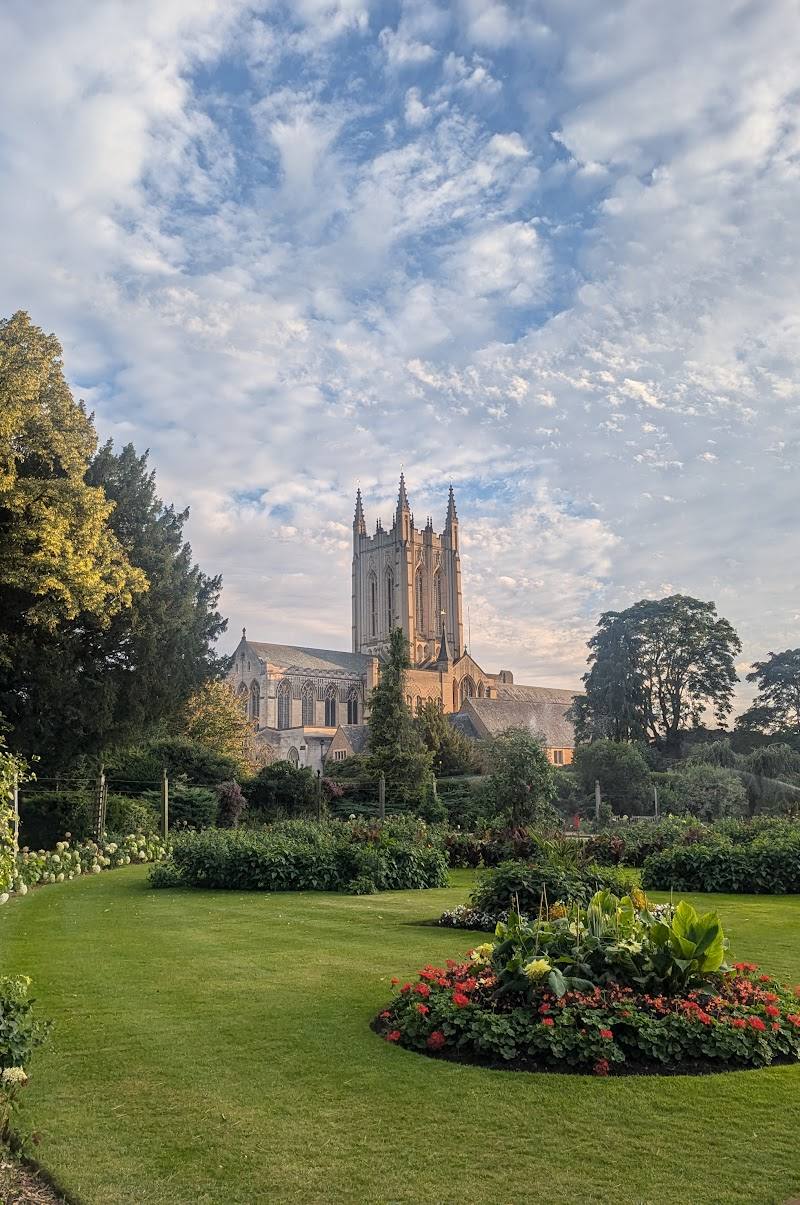
This is a substantial medieval monastic landscape embedded in the centre of Bury St Edmunds, not just a scatter of ruins. The complete 14th-century Great Gate, Norman Tower and altered west front make the abbey’s former scale unusually legible, while the surrounding gardens offer an easy way to explore it on foot.
Atmospheric · Ancient-feeling
Find your way
Open mapAbbey Gardens, Angel Hill, Bury St Edmunds, Suffolk IP33 1LS
Opening map…
Know this place a little better?
The experience
Explore the abbey remains on foot through Abbey Gardens. Give time to the Great Gate, Norman Tower and church ruins, and use the surviving fabric to picture the extent of the monastery. Paths are mostly tarmac, though some approaches to the ruins are uneven, grassy or stepped.
Things to do
See the Great Gate
Take in the complete 14th-century Great Gate, one of the abbey’s most substantial surviving features.
Find the Norman Tower
Look for the Norman Tower among the abbey remains in Abbey Gardens.
Read the church ruins
Explore the impressive ruins and altered west front of the abbey church, bearing in mind that close access to some remains is over grass or steps.
Use the free digital guide
English Heritage points visitors to a free digital guide on the Bloomberg Connects app for expert insights while exploring.
Make a day of it
Quick escape · About 1 hour
Quick Escape: the abbey’s surviving landmarks
- 01
Enter Abbey Gardens on foot.
- 02
Make the Great Gate your first stop.
- 03
Continue to the Norman Tower and the church ruins, noting the altered west front.
- 04
Allow extra time for uneven or grassy approaches and check current opening information before visiting.
Half day · Half day
Make a half day of it: abbey and gardens
- 01
Explore the abbey remains, including the Great Gate, Norman Tower and church ruins.
- 02
Continue through Abbey Gardens; the English Heritage page lists a refreshment kiosk and toilets within the gardens.
- 03
Allow time for a break in the gardens or nearby town centre; confirm current facilities before travelling.
Verified history
The remains of the martyred Anglo-Saxon king St Edmund were moved to this site around 903, and his shrine became a place of pilgrimage. The abbey was founded in 1020 and grew in wealth and power until its suppression in 1539. English Heritage identifies the complete 14th-century Great Gate, Norman Tower and the ruins and altered west front of the abbey church among the surviving remains.
Hidden details
The abbey’s unusual scale — Compare the surviving Great Gate, Norman Tower and church remains: English Heritage describes the abbey church as immense and the monastery as once among England’s richest and most powerful.
A shrine that drew pilgrims — The abbey’s story began before its foundation: St Edmund’s remains were moved here around 903, and the shrine became a pilgrimage destination.
When to go
· No preferred time of day is established by the supplied evidence.
The supplied English Heritage information describes the site as open throughout the week but gives no seasonal recommendation. Wet-weather mud may affect some areas.
Some areas can become muddy in wet weather; surfaces are uneven and there are slopes.
Worth pairing with
Thetford Priory
English Heritage identifies Thetford Priory, 11 miles from the abbey, as a possible further monastic-history stop.
Church of the Holy Sepulchre, Thetford
English Heritage notes this church near Thetford Priory as the only surviving remains of a priory of the Canons of the Holy Sepulchre in England.
What to look for
Look for the complete 14th-century Great Gate, the Norman Tower, the altered west front and the scale of the church ruins. The remains are set within Abbey Gardens, so notice how the surviving buildings relate to the wider grounds.
The story
Benedictine monasticism, the shrine and pilgrimage of St Edmund, and the abbey’s suppression in 1539.
Best time to go
Open year-round according to the supplied English Heritage information; the ruins can be visited in any season. Paths may be muddy in wet weather.
Choose a dry spell if you want to explore the grass and uneven approaches around the ruins. The supplied English Heritage page gives daily opening hours, but check its current page before setting out.
How long to spend
1–2 hours
Perfect for
History lovers · Walkers · Photographers
Before you go
Address
Phone
Website
Listed hours
- Monday: 7:30am-8pm
- Tuesday: 7:30am-8pm
- Wednesday: 7:30am-8pm
- Thursday: 7:30am-8pm
- Friday: 7:30am-8pm
- Saturday: 7:30am-8pm
- Sunday: 9am-8pm
Check before visiting.
Google rating
Practical information
Opening & access
The abbey remains are within Abbey Gardens, reached on foot through the garden entrances. English Heritage lists free entry. Some ruins are approached over grass or steps; surfaces can be uneven and muddy when wet.
Parking
A charged car park is opposite the Abbey Gate; it is not managed by English Heritage. Check current details before travelling.
Check before visiting
Toilets
Toilets are listed within the Abbey Gardens. English Heritage says it has no facilities at the ruins themselves.
Food & drink
A refreshment kiosk is listed in the Abbey Gardens; other food options are available in central Bury St Edmunds. Check current provision before visiting.
Check before visiting
Dogs
Dogs on leads are welcome, according to English Heritage.
Accessibility
Tarmac paths pass the ruins, but close access to some is over grass or by steps. English Heritage notes uneven surfaces, slopes and areas that can become muddy when wet. Google source information also lists a wheelchair-accessible car park, entrance and toilet; check current access arrangements.
Check before visiting
Cost
Free
Gallery
Place photographsKeep exploring
Around Bury St Edmunds Abbey
Within 50 km · approximate straight-line distances