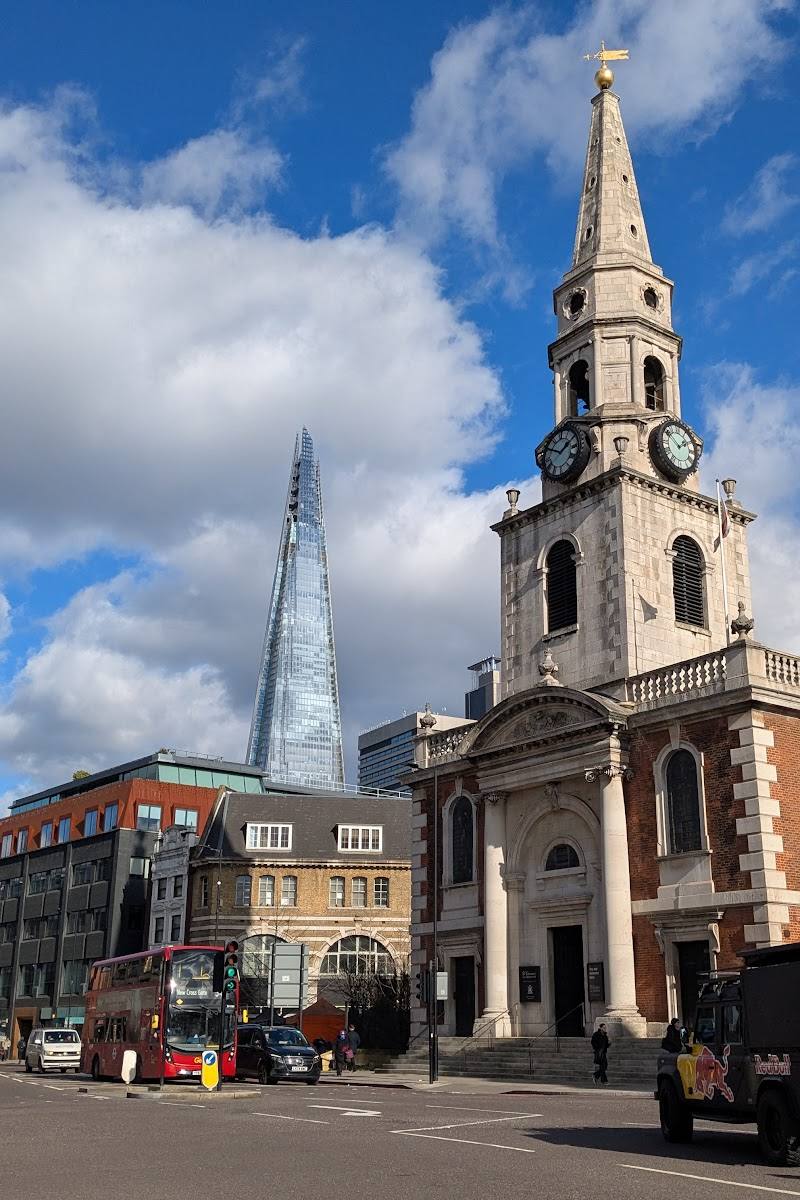
60 Trinity St, London SE1 4HT
Alfred the Great Statue
Strange monument
Place photograph
3.4
Wildland
Under 1 hour
Time
Check
Cost
Historic
Feel
Why it's Wildland
3.4A statue of Alfred the Great with a surprising Roman past: conservation work in 2021 revealed that its lower stone section was once part of a monumental Roman sculpture of Minerva.
This is a brief urban heritage stop rather than a wild landscape. Its distinction is the remarkable reuse of Roman sculpture: conservation revealed that part of the statue may have belonged to a roughly three-metre-high Minerva, likely associated with a temple complex.
Historic
Find your way
Open map60 Trinity St, London SE1 4HT
Opening map…
Know this place a little better?
The experience
A short stop to see the statue and consider its layered history. The supplied heritage source describes its position in Trinity Church Square and the Roman sculpture fragment identified during 2021 conservation.
Things to do
Explore the statue’s Roman connection
Read the Heritage of London account of how examination of the statue’s Bath stone section led specialists to identify it as part of a Roman sculpture of Minerva.
A short stop
Make a day of it
Quick escape · Under 1 hour
A closer look at Alfred’s statue
- 01
Visit the statue at Trinity Church Square.
- 02
Read about its 2021 conservation and the Roman Minerva fragment identified in the stone.
Verified history
The Heritage of London says Alfred has stood at the centre of Trinity Church Square since about 1826. The statue was conserved in summer 2021. Examination of its Bath stone section identified it as South Cotswold Limestone and led specialists to conclude that it came from a statue of Minerva. The account estimates the original sculpture at around three metres tall and says its carving is typical of the mid-second century AD; it may have belonged to a temple complex. The upper Coade stone portion is thought likely to have been fired as one piece and then cut to fit around the Roman fragment. The statue had previously been thought to have an early origin, possibly as a displaced statue from Westminster Hall.
Hidden details
A Roman sculpture within the statue — The Heritage of London reports that the statue’s stone section was identified during conservation as part of a Roman Minerva sculpture. The source says the original may have stood about three metres high and probably belonged to a temple complex.
When to go
· No specific time is supported by the supplied sources.
The supplied source gives no seasonal information.
Check before visiting.
What to look for
Look at the statue’s stone section: the Heritage of London account says conservation work identified it as part of a Roman Minerva sculpture. The supplied source does not specify a precise viewing point or whether the fragment is clearly distinguishable in person.
The story
Archaeology
Best time to go
Any season; the supplied source gives no seasonal guidance.
No particular time is supported by the supplied sources. Check before visiting.
How long to spend
Under 1 hour
Perfect for
History lovers
Before you go
Practical information
Opening & access
The Heritage of London page places the statue at the centre of Trinity Church Square. Public access and any restrictions are not confirmed; check before visiting. Access arrangements are unconfirmed. Check before visiting; do not enter private land or restricted structures.
Check before visiting
Parking
Check before visiting
Check before visiting
Toilets
Check before visiting
Check before visiting
Food & drink
Check before visiting
Check before visiting
Dogs
Check before visiting
Check before visiting
Accessibility
The source row reports a wheelchair-accessible entrance, but this detail is not independently supported by the supplied heritage source. Check current conditions before visiting.
Check before visiting
Cost
Check before visiting
Check before visiting
Gallery
Place photographsKeep exploring
Around Alfred the Great Statue
Within 50 km · approximate straight-line distances