Near Banff, Aberdeenshire
RSPB Scotland Troup Head
Mixed-habitat reserve
Source image
8.3
Wildland
1–2 hours
Time
Check
Cost
Wild
Feel
Why it's Wildland
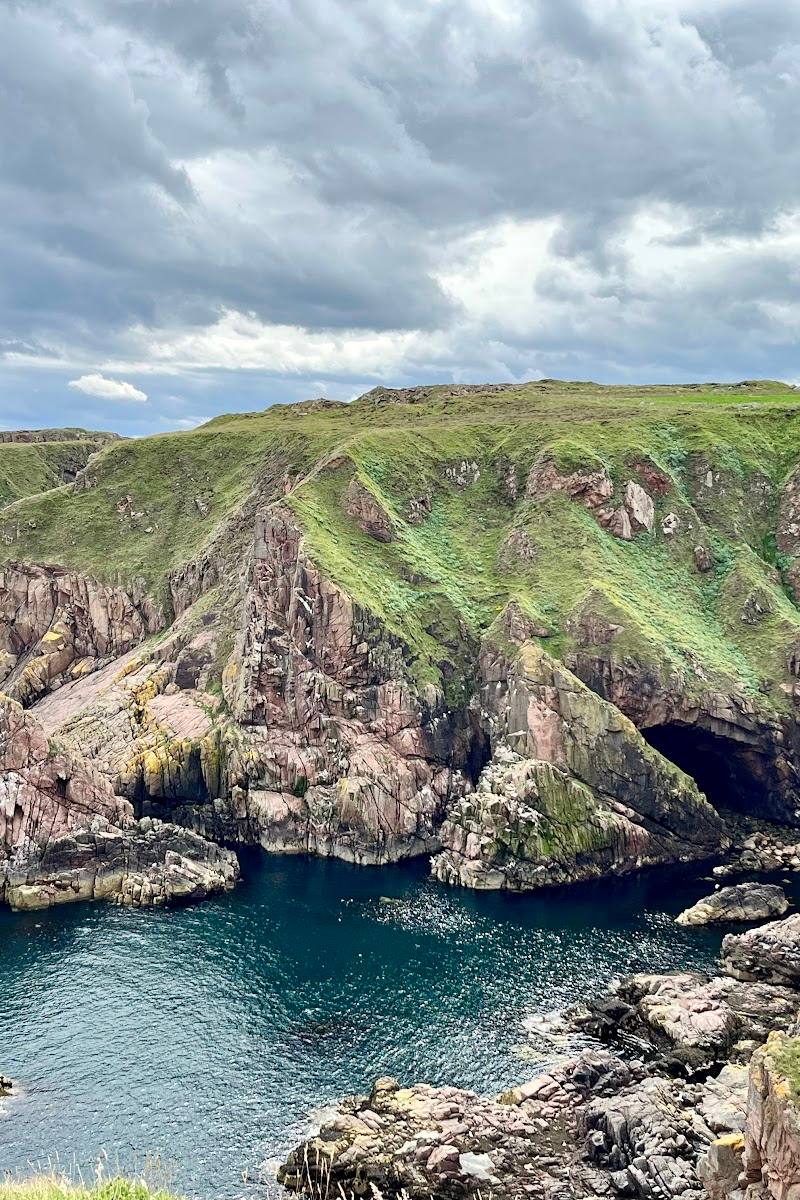
8.3Twenty-nine hectares of cliffs rising to more than 90 m support Scotland’s largest mainland gannet colony, alongside thousands of other seabirds.
Troup Head earns its place for a rare combination of scale and spectacle: high North Sea cliffs crowded with nesting seabirds, with the possibility of cetaceans offshore. This is a wildlife visit, not an easy-access viewpoint: expect a rough approach, steep steps and exposed cliff edges.
Wild · Dramatic · Big-sky
Find your way
Open mapNear Banff, Aberdeenshire
Opening map…
Know this place a little better?
The experience
Walk from the small car park towards the reserve gate and explore the clifftop path where conditions allow. Watch the nesting seabirds from a safe distance, and scan offshore for dolphins, porpoises or minke whales. The route includes steep steps and uneven ground; keep well back from cliff edges.
Things to do
Watch the mainland gannet colony
Observe the gannets nesting on Troup Head’s high cliffs, from the path and at a safe distance from cliff edges.
Allow at least 30 minutes on site; total visit time depends on the walk and conditions.
Look for the other cliff-nesting seabirds
Scan the cliff face for kittiwakes, guillemots and razorbills among the gannet colony.
Allow 20–30 minutes
Search for puffins in spring
Watch for puffins nesting in burrows or crevices, as described by the RSPB. Keep to the path and avoid disturbing birds.
Allow 20 minutes
Scan offshore for cetaceans
Look out to sea for dolphins, porpoises or minke whales; sightings are possible, not guaranteed.
Allow 15–30 minutes
Make a day of it
Quick escape · About 1–2 hours; allow extra time for the 920 m approach and the uneven, stepped paths.
Quick Escape: the seabird cliffs
- 01
Park in the small reserve car park, if spaces are available.
- 02
Walk the 920 m approach to the reserve gate, allowing for sloped sections.
- 03
Follow the clifftop path where conditions permit; watch seabirds from a safe distance and keep well back from exposed edges.
- 04
Scan offshore for cetaceans before retracing your route.
Half day · Half day
Make a half day of it: watch the colony change
- 01
Arrive with time to walk the approach from the car park and take breaks on the way.
- 02
Spend an unhurried spell watching the cliff colony: look for gannets, kittiwakes, guillemots and razorbills.
- 03
In spring, look for puffins around burrows and crevices; scan offshore for dolphins, porpoises or minke whales.
- 04
Before leaving, check current access information and allow time for the return walk; no toilets are available at the reserve.
Verified history
The supplied sources establish Troup Head’s current conservation significance rather than a detailed human history. The RSPB describes 29 hectares of cliff face rising to more than 90 m and supporting over 50,000 seabirds each year, including Scotland’s largest mainland gannet colony. No further historical claims are included.
Hidden details
A substantial cliff face — The reserve’s 29 hectares of cliff face rise to more than 90 m, creating nesting ledges, nooks and crevices.
Look beyond the gannets — The RSPB also records thousands of kittiwakes, guillemots and razorbills at the cliffs, alongside other seabird species.
The approach is part of the visit — The walk from the car park to the reserve gate is 920 m, on unconsolidated hardcore that is sloped in places; further paths include steep steps and uneven, unsurfaced ground.
When to go
April · May · June · July · August · No specific time of day is verified in the supplied sources. Check the forecast and current access information before travelling.
The RSPB says tens of thousands of seabirds return in spring and describes the cliffs as a busy seabird city in summer. Spring and summer are therefore the best-supported seasons for observing the nesting colony.
The cliffs are exposed. Check the weather and access conditions before setting out, and keep well back from cliff edges. The supplied RSPB page also carries a notice about a Northfield Road closure for 9–12 May; check the page for current dates and conditions before travel.
What to look for
Look for gannets on the cliff ledges, plus kittiwakes, guillemots and razorbills. In spring, watch for puffins nesting in burrows or crevices. Scan the sea for dolphins, porpoises or minke whales, which may be seen offshore.
Best time to go
Spring and summer, when seabirds return and nest on the cliffs. The RSPB describes spring arrivals and a busy summer colony.
Spring and summer for returning and nesting seabirds. Choose a calm, clear day if possible, but check the forecast and access conditions before travelling; the cliffs are exposed.
How long to spend
1–2 hours
Perfect for
Wildlife lovers · Photographers · Walkers
Before you go
Address
Phone
Website
Listed hours
- Monday: Open 24 hours
- Tuesday: Open 24 hours
- Wednesday: Open 24 hours
- Thursday: Open 24 hours
- Friday: Open 24 hours
- Saturday: Open 24 hours
- Sunday: Open 24 hours
Check before visiting.
Google rating
Practical information
Opening & access
RSPB reserve reached by a 920 m path from the small car park. The route to the reserve gate is sloped in places; paths include steep steps and narrow, uneven, unsurfaced sections. Check the RSPB page for current access conditions before setting out.
Check before visiting
Parking
Small car park with 20 unmarked spaces; no designated accessible spaces. The approach path to the reserve gate is 920 m. Confirm current road access before travel.
Toilets
No toilets at the reserve; the RSPB lists the nearest toilets in Banff, 11 miles (17 km) away.
Food & drink
No on-site café or food provision is established by the supplied evidence. Check before visiting.
Check before visiting
Dogs
Dogs should be kept under close control because of exposed cliff edges and nesting birds. Assistance dogs are welcome throughout the reserve.
Accessibility
The approach is 920 m of unconsolidated hardcore, sloped in places, with steep flights of steps; paths are narrow in places, uneven and unsurfaced. The smallest reserve gate is 35 cm wide. No designated accessible parking spaces. Contact the RSPB to discuss access needs before visiting.
Cost
Check before visiting
Check before visiting
Water
Sea
Gallery
Place photographsKeep exploring
Around RSPB Scotland Troup Head
Within 50 km · approximate straight-line distances
 Place photograph8.5
RSPB Scotland Troup Head
Troup Head, near Banff, Aberdeenshire AB45 3JJ
0.0 km away
 Place photograph7.4
Longhaven Cliffs Nature Reserve
Longhaven, near Peterhead, Aberdeenshire, Scotland
40.0 km away