504 Upper Thames Street, London EC4V 3EH
Queenhithe Dock and Wharf
Anglo-Saxon
Place photograph
3.9
Wildland
Under 1 hour
Time
Check
Cost
Atmospheric
Feel
Why it's Wildland
3.9A small inlet in the Thames-side wall marks a waterfront used for trade across many centuries. Queenhithe’s surviving dock sits above buried remains of Roman and early medieval quays, while a 30-metre mosaic nearby lays out London’s history in images.
Queenhithe earns its place for the way a modest Thames-side inlet opens onto a much deeper story: Roman waterfront remains, an early medieval trading shore and a long mosaic that turns London’s past into something to explore on foot.
Atmospheric · Historic
Find your way
Open map504 Upper Thames Street, London EC4V 3EH
Opening map…
Know this place a little better?
The experience
A compact riverside history stop. Inspect the dock from the public riverside route, then spend time with the Queenhithe Mosaic and its details. Check current access and restrictions before visiting.
Things to do
Find the old dock in the river wall
Look for the small inlet where the riverside cuts back from the Thames. The surviving dock is a modest visible trace of a much larger historic trading waterfront.
Check before visiting
Read the Queenhithe Mosaic
Follow the 30-metre mosaic’s timeline of London history, from Roman-era scenes through later events and into the present.
Check before visiting
Look for the dock’s archaeological clues
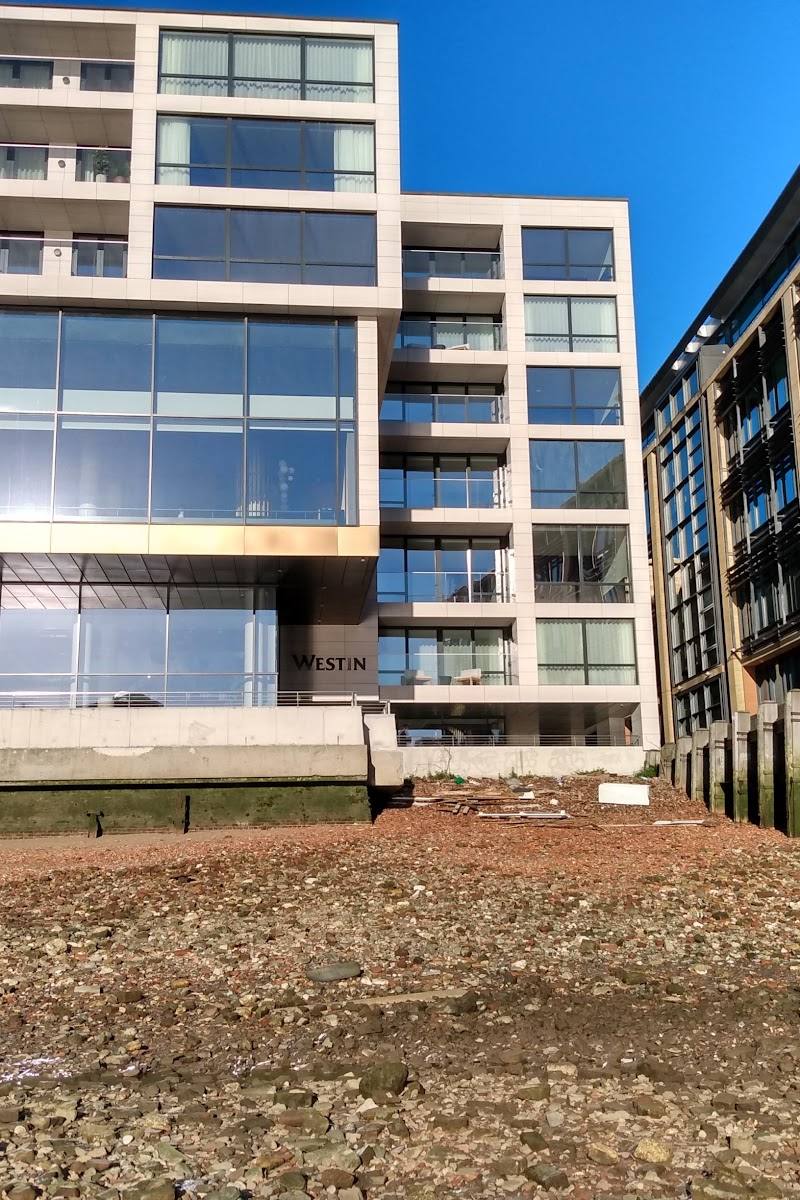
At low water, the source says remains of 19th-century barge beds can be seen. Observe only from a permitted public viewpoint; do not enter or disturb the foreshore.
Check before visiting
Make a day of it
Quick escape · Under 1 hour
Quick riverside history stop
- 01
Find the dock’s recess in the north-bank river wall from the riverside route.
- 02
Look across the inlet and consider its former role as a landing place for trading boats.
- 03
Explore the nearby Queenhithe Mosaic, following its timeline and looking for its Thames, London Bridge and disaster scenes.
Half day · Check before visiting
Make a north-bank walk of it
- 01
Include Queenhithe Dock and the mosaic as a history stop on a walk along the north bank between Blackfriars and Tower Bridge.
- 02
Pause at the dock, then take time to read the mosaic’s London timeline.
- 03
Check the route and current access conditions before setting out.
Verified history
The source describes archaeological evidence of Roman quays and a trading shore established in the late ninth century. It says the dock was called Ethelred’s Hythe and that Queen Matilda, wife of Henry I, gave it the name Queenhithe in the early 12th century when she received duties from the dock. By the 13th century it was a major landing place for foodstuffs; its use declined as larger ships favoured Billingsgate. The present mosaic was installed between 2011 and 2014 by artists, volunteers, local residents and schoolchildren, with experts led by Tessa Hunkin.
Hidden details
The Thames runs through the mosaic — Look for the river running through the centre of the 30-metre artwork, with London Bridge and scenes from the city’s history around it.
Period clues in the mosaic — The mosaic incorporates materials and shells found on the foreshore; the source highlights Tudor tiles around the Tudor section.
Barge beds at low water — The source reports that remains of 19th-century barge beds can be visible at low tide. Do not access or disturb the foreshore; check current restrictions.
When to go
· Daylight; the source notes that foreshore remains may be visible at low water, but does not give tide times.
The supplied source does not identify a best season. Daylight helps with viewing the dock and mosaic.
Check before visiting; weather-related access information is not confirmed.
What to look for
- 01
Find the dock’s indentation in the river wall
- 02
follow the River Thames through the mosaic
- 03
spot its depictions of London Bridge, the Great Fire, the Great Plague and the Blitz, and look for period details such as Tudor tiles and pottery motifs.
The story
Archaeology; Industry
Best time to go
Any time of year; check conditions and access before visiting.
Daylight is best for seeing the dock and reading the mosaic. The foreshore is tidal; do not descend or disturb it, and check current restrictions before visiting.
How long to spend
Under 1 hour
Perfect for
History lovers · Walkers · Photographers
Before you go
Address
Website
Listed hours
- Monday: Open 24 hours
- Tuesday: Open 24 hours
- Wednesday: Open 24 hours
- Thursday: Open 24 hours
- Friday: Open 24 hours
- Saturday: Open 24 hours
- Sunday: Open 24 hours
Check before visiting.
Google rating
Practical information
Opening & access
A historic dock beside the Thames Path on the north bank. The supplied source describes it as a place to visit; check current access and any restrictions before travelling. Do not enter the foreshore or disturb the dock. Access arrangements are unconfirmed. Check before visiting; do not enter private land or restricted structures.
Check before visiting
Parking
Check before visiting
Check before visiting
Toilets
Check before visiting
Check before visiting
Food & drink
Check before visiting
Check before visiting
Dogs
Check before visiting
Check before visiting
Accessibility
Check before visiting; step-free access and surface conditions are not confirmed.
Check before visiting
Cost
Check before visiting
Check before visiting
Water
River
Gallery
Place photographsKeep exploring
Around Queenhithe Dock and Wharf
Within 50 km · approximate straight-line distances