Alexandra Park, Hastings, East Sussex
Old Roar Gill
Mixed-habitat reserve
Place photograph
5.7
Wildland
1–2 hours
Time
Check
Cost
Atmospheric
Feel
Why it's Wildland
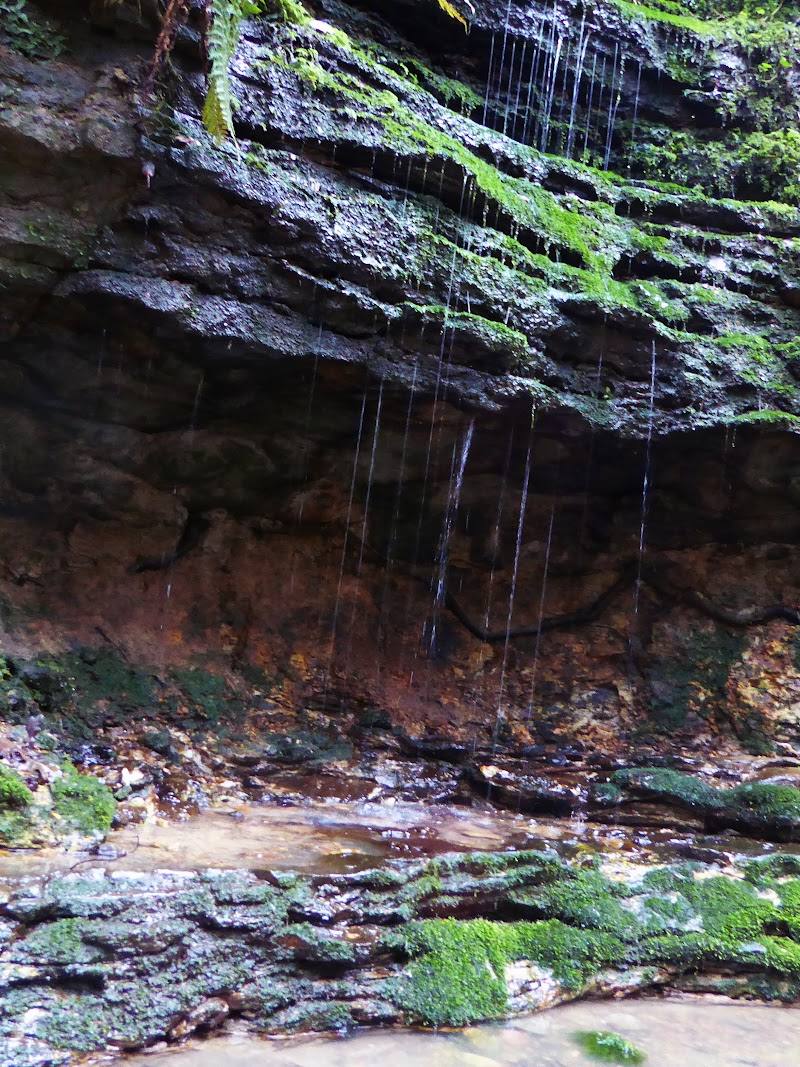
5.7A narrow, deeply cut woodland valley tucked into Hastings, where a stream threads through mosses, ferns and ancient-woodland flowers. The gill feels secluded, though the wider reserve lies close to the town.
Old Roar Gill earns its place for the contrast between its steep, intimate valley and its urban-edge setting, plus the rare and scarce wildlife supported by its streamside deadwood. It is a genuine woodland discovery, but access is affected by path closures, so check diversions rather than trying to reach waterfalls by unofficial routes.
Atmospheric · Ancient-feeling · Peaceful
Find your way
Open mapAlexandra Park, Hastings, East Sussex
Opening map…
Know this place a little better?
The experience
Explore the gill only by currently open, signed paths. For a longer outing, combine it with the wider Alexandra Park and reservoir loop, checking route conditions first.
Things to do
Walk an open section of the wooded gill
Explore the steep, narrow valley on paths that are currently open, following council diversions where necessary. Do not attempt closed sections or unofficial streamside access.
Look for spring woodland flowers
Watch for bluebells, wood anemones and wood avens; toothwort is also noted as a feature of the gill and park.
Notice the streamside deadwood habitat
Look at fallen deadwood in the stream and on the woodland floor, habitat for rare and scarce invertebrates including Lipsothrix nervosa and Macrogastra rolphii.
Watch and listen for birds
The council notes spotted flycatchers, grey wagtails and kingfishers in the woods and open water at the upper end of the park. Sightings are not guaranteed.
Make a day of it
Quick escape · About 1 hour; route duration and access may vary
A short look into the gill
- 01
Start from an open, signed approach in the Alexandra Park area.
- 02
Follow only paths confirmed open and any signed diversions.
- 03
Pause to notice the steep wooded valley, streamside ferns and mosses.
- 04
Return by the same open route; do not use closed paths or enter the stream bed.
Half day · About 1 hour 25 minutes for the listed 6.3 km loop; allow extra time for stops and diversions
Gill and Alexandra Park loop
- 01
Use Alexandra Park as the wider starting area and check current path closures before setting out.
- 02
Follow the listed loop past Old Roar Gill, Buckshole Reservoir and Shornden Reservoir.
- 03
Take a break at an appropriate open area, then return to the starting point.
- 04
Use a current map and follow signed diversions; the route description does not establish that every section is currently open.
Verified history
Old Roar Gill is a deeply cut, narrow wooded valley along the upper reaches of Alexandra Park. The available sources do not establish a more detailed history of the gill or verify the proposed origin of its name.
Hidden details
Toothwort in the spring woodland — The scarce parasitic plant toothwort is noted as a feature of the gill and park. Look carefully in spring, without leaving paths or disturbing plants.
A rare life in the deadwood — Deadwood in the stream and on the woodland floor supports scarce invertebrates, including the endemic crane fly Lipsothrix nervosa and nationally scarce door snail Macrogastra rolphii.
When to go
April · May · A quiet morning is a reasonable choice for a woodland walk, but no source confirms a particular time as best.
Spring is highlighted for bluebells, wood anemones and wood avens. Rain may increase stream flow, but wet conditions can make uneven paths more slippery.
After rain, paths may be muddy or slippery. Check current closures and diversions before setting out; do not use closed routes to reach waterfalls.
The route
- ascent
- 103 m for the listed loop
- surface
- A mix of paths; surface details for the whole route are not confirmed. Gill paths are described as natural and uneven.
- distance
- 6.3 km for the listed Alexandra Park and reservoir loop
- duration
- Approximately 1 hour 25 minutes for the listed loop
- difficulty
- Listed as easy by HiiKER, though local gill paths may be uneven and closures or diversions affect access
- waymarking
- The council says closures have signed nearby diversions. General waymarking for the full loop is not confirmed.
- route shape
- Loop
- start point
- Alexandra Park area; confirm a suitable open starting point and current route before setting out.
- parking start
- Parking availability and current restrictions are not confirmed; check before visiting.
- shorter alternative
- A shorter out-and-back visit to an open section of the gill is possible in principle, but a verified distance and currently open route are not available.
- Old Roar Gill's steep, wooded valley
- Buckshole Reservoir
- Shornden Reservoir
- Alexandra Park
Worth pairing with
Alexandra Park
The gill runs along the upper reaches of Alexandra Park. A supplied route description offers a longer loop linking the gill with Buckshole and Shornden reservoirs; check current path status before relying on it.
What to look for
- 01
In spring, look for bluebells, wood anemones, wood avens and the scarce parasitic plant toothwort. Along the stream and woodland floor, notice the deadwood habitat
- 02
the reserve supports scarce invertebrates including the endemic crane fly Lipsothrix nervosa and nationally scarce door snail Macrogastra rolphii. Spotted flycatchers, grey wagtails and kingfishers are recorded in the woods and open water at the upper end of the park.
The story
Archaeology
Best time to go
Spring for bluebells, wood anemones and wood avens; after rain for the strongest stream flow, while taking extra care on wet paths.
Spring is the clearest season for woodland flowers. Visit after rainfall if you hope to see more water moving through the gill, but expect muddy or slippery sections and obey all closures.
How long to spend
1–2 hours
Perfect for
Walkers · Photographers · Wildlife lovers
Practical information
Opening & access
A wooded valley within the Old Roar Gill & Coronation Wood Local Nature Reserve, near Alexandra Park. Parts of the Streamside Walk are closed for safety reasons; follow signed diversions and check current conditions before visiting. Do not enter closed or restricted areas.
Check before visiting
Parking
Parking options and current availability are not confirmed; check before visiting.
Check before visiting
Toilets
Check before visiting.
Check before visiting
Food & drink
No food facilities are confirmed at the gill; check before visiting.
Check before visiting
Dogs
Dog access rules are not confirmed; check before visiting.
Check before visiting
Accessibility
The paths are described as natural and uneven. The council reports signed diversions around closed sections; wheelchair access is not confirmed and the route may be unsuitable for some visitors.
Cost
Check before visiting
Check before visiting
Water
Stream
Gallery
Place photographsKeep exploring
Around Old Roar Gill
Within 50 km · approximate straight-line distances