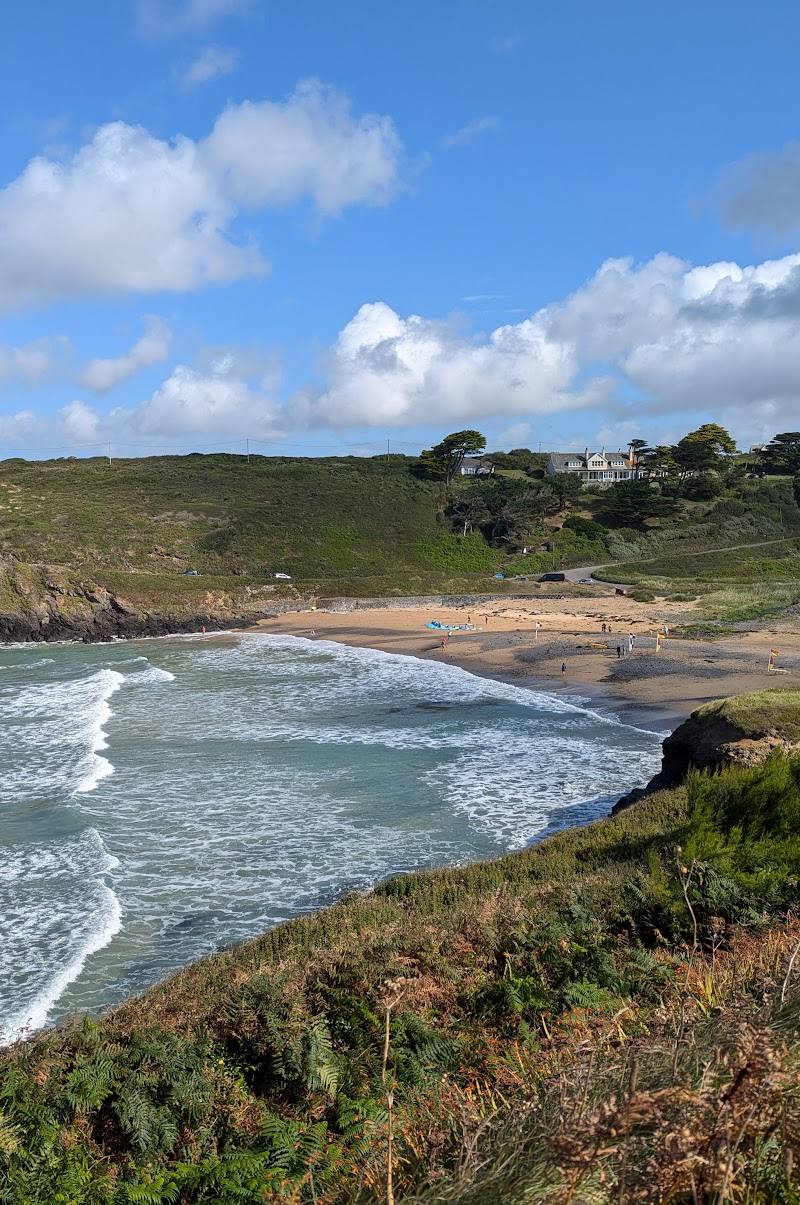
Poldhu Cove, Mullion, near Helston, Cornwall, TR12 7JB
Poldhu Cove
Beach
Place photograph
7.4
Wildland
1–2 hours
Time
Paid
Cost
Sheltered
Feel
Why it's Wildland
7.4A sandy cove on the Lizard Peninsula with a remarkable connection to the dawn of transatlantic wireless communication.
Poldhu pairs a sheltered sandy cove with an unusually tangible piece of communication history: the nearby site of Marconi’s 1901 transatlantic wireless signal. It earns its place for that combination of coastal atmosphere and a story visitors can follow beyond the beach.
Sheltered · Atmospheric
Find your way
Open mapPoldhu Cove, Mullion, near Helston, Cornwall, TR12 7JB
Opening map…
Know this place a little better?
The experience
Combine time on the sand with a coastal-path visit to the nearby Marconi Centre. The beach is reached from the National Trust car park; check tides, conditions, facilities and seasonal restrictions before setting out.
Things to do
Spend time on the sandy beach
Enjoy the cove’s sand and coastal setting. Check tide and sea conditions before visiting; no swimming permission or safety conditions are assumed here.
30 minutes–2 hours
Follow the coast path towards the Marconi Centre
The National Trust places Poldhu on the South West Coast Path, and the supplied beach guide describes the Marconi Centre as a short walk south of the cove. Confirm access and opening arrangements before visiting.
Explore the cove at low tide
The supplied beach guide reports rock pools exposed at either side of the beach at low tide. Check tide times and take care on the shore.
Make a day of it
Quick escape · 1–2 hours
Quick cove visit
- 01
Use the National Trust car park and follow the approximately 300-yard route to the beach.
- 02
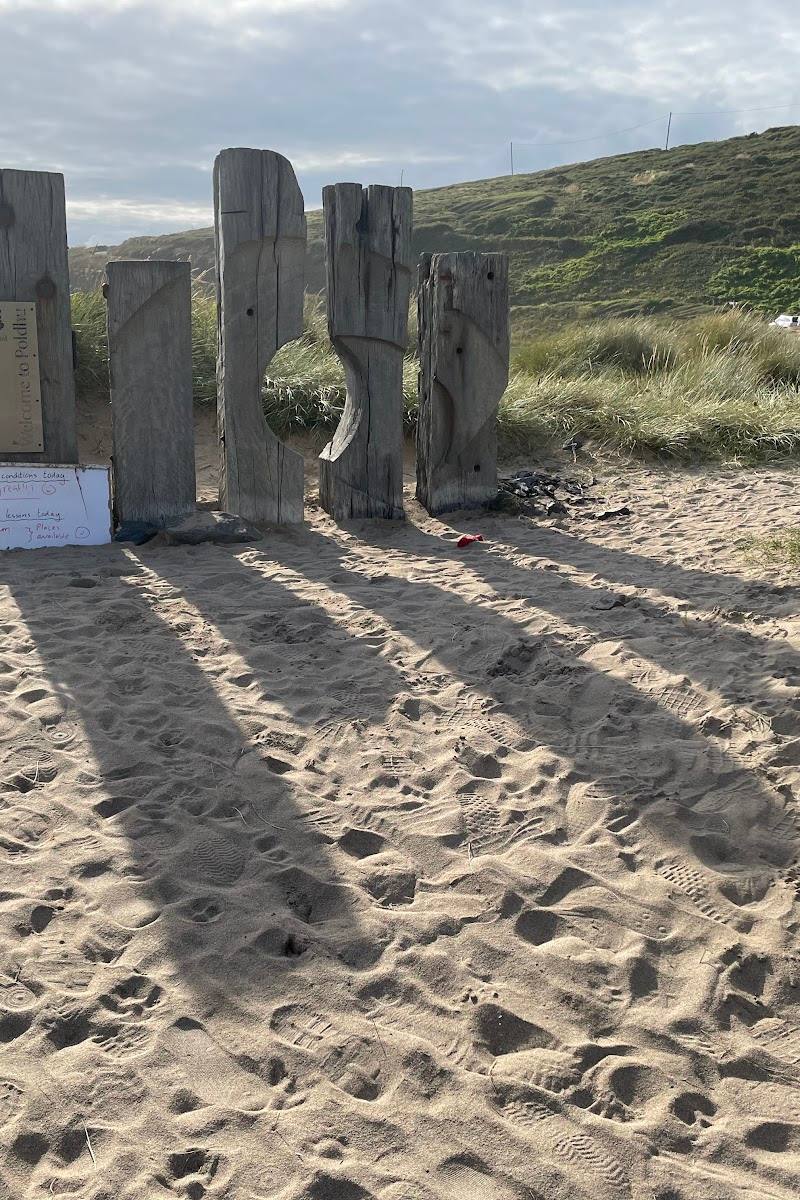
Spend time on the sand and look for the beach sculpture pictured by the National Trust.
- 03
Check tide, weather and any current beach restrictions before you go.
Half day · Half day
Beach and Marconi story
- 01
Visit Poldhu Cove and take time on the beach.
- 02
Follow the South West Coast Path towards the nearby Marconi Centre; confirm the route and current opening arrangements before setting out.
- 03
Explore the cove’s connection to the 1901 transatlantic wireless signal.
Verified history
Poldhu Point is associated with Guglielmo Marconi’s Poldhu Wireless Station. The supplied sources identify it as the site from which the first transatlantic radio signal was transmitted in December 1901; a stone monument and the volunteer-run Marconi Centre mark the location. The available material does not establish further details about the signal or its reception, so those are not added here.
Hidden details
The cove’s wireless connection — Poldhu’s story extends beyond the beach: the supplied sources connect nearby Poldhu Point with Marconi’s wireless station and the 1901 transatlantic signal. The Marconi Centre is described as a short walk from the cove along the coast path.
When to go
May · June · July · August · September · Check local conditions and seasonal crowd levels; no source-supported time of day is established.
The supplied beach guide reports lifeguard cover from May to the end of September. The National Trust lists seasonal temporary toilets from 1 April to 31 October. Confirm current dates and services before travel.
Check the coastal forecast, sea conditions and tide times before visiting. No specific weather or water-safety conditions are verified by the supplied sources.
Worth pairing with
Marconi Centre
A historically relevant pairing connected to the wireless experiments at Poldhu Point. The supplied beach guide places it along the coast path south of the cove; check current opening arrangements and route conditions.
Mullion Cove
The National Trust notes that Poldhu is on the South West Coast Path approximately 1.5 miles north of Mullion Cove, making it a possible coastal-walk pairing. Check route conditions and the return plan.
What to look for
Look for the beach sculpture shown by the National Trust, then follow the coastal path towards the Marconi Centre and learn about the wireless experiments associated with Poldhu Point.
The story
Marconi and the history of wireless communication
Best time to go
Late spring to early autumn for beach visits; check current lifeguard provision and seasonal facilities before travelling.
Late spring to early autumn is the source-supported season for a beach visit. For a quieter-feeling visit, consider spring or autumn, but check weather and current facilities.
How long to spend
1–2 hours
Perfect for
Families · Walkers · History lovers · Photographers
Practical information
Opening & access
National Trust car park and a path of about 300 yards to the beach. Check current conditions and access before visiting.
Check before visiting
Parking
National Trust car park, about 300 yards from the beach. Free for members who register; non-members can pay by cash or the JustPark app. Charges listed by the National Trust: £1 for 1 hour, £2 for 2 hours, £3 for 3 hours, £4 all day.
Toilets
Temporary facilities, including an accessible toilet, are listed in the car park from 1 April to 31 October. Check current provision.
Check before visiting
Food & drink
Poldhu Beach Cafe is listed by the National Trust; check opening times before visiting.
Check before visiting
Dogs
Dogs are allowed, but a council-enforced beach ban applies from 1 July to 31 August, 10am–6pm. Dogs are permitted on footpaths around the beach during the ban.
Accessibility
The National Trust describes fairly even terrain from the car park to the beach, approximately 300 yards, and also notes steps or uneven terrain. Check the linked accessibility guide for current details; assistance may be needed.
Check before visiting
Cost
Paid
Water
Sea
Gallery
Place photographs
Keep exploring
Around Poldhu Cove
Within 50 km · approximate straight-line distances