Abbey Lane, near Woodhall Spa, Lincolnshire, LN10 6UH
Kirkstead Abbey
Monastic ruins
Place photograph
5.2
Wildland
Under 1 hour
Time
Check
Cost
Atmospheric
Feel
Why it's Wildland
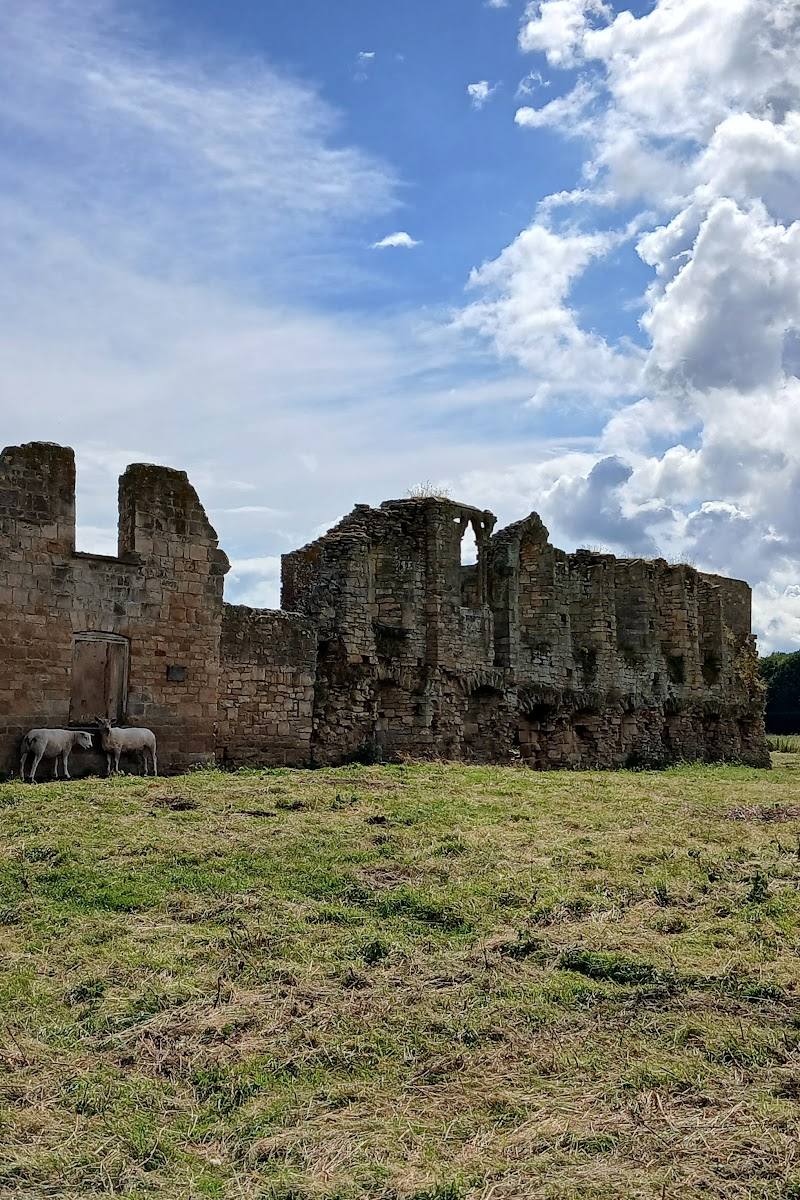
5.2A surviving fragment of a once-important Cistercian abbey: its south wall still stands above the fields, while the moat and turf-covered foundations hint at the scale of what has vanished.
Kirkstead is a quiet encounter with a substantial medieval monastic site in a rural setting. The surviving wall, softened moat and grass-covered foundations reward a slow look, although the fenced ruins are viewed from the footpath rather than explored inside.
Atmospheric · Ancient-feeling · Peaceful
Find your way
Open mapAbbey Lane, near Woodhall Spa, Lincolnshire, LN10 6UH
Opening map…
Know this place a little better?
The experience
Take the footpath past the fenced abbey remains towards St Leonard’s Chapel. Pause to read the surviving church wall against the site’s moat and grass-covered foundations, then look for the rescued carved stones by the chapel.
Things to do
View the surviving abbey wall
From the footpath, look for the surviving section of the church’s south wall, including its round-headed arches and the corbel described on its south side. The ruins are fenced off.
Check before visiting
Trace the line of the moat
Look across the site for the visible, softened profile of the moat surrounding the former monastic buildings.
See the abbey stones by St Leonard’s Chapel
Continue along the footpath to the chapel; the source describes carved stones rescued from the abbey arranged in a circle in the churchyard.
Check before visiting
Make a day of it
Quick escape · Under 1 hour
Quick look at the abbey remains
- 01
Approach from Abbey Lane using the described track towards the abbey site.
- 02
View the fenced ruins from the footpath; look for the standing section of church wall and the moat.
- 03
Continue towards St Leonard’s Chapel if conditions and time allow.
Half day · Check before visiting
Abbey and chapel walk
- 01
Follow the footpath from Abbey Lane past the abbey remains.
- 02
Look for the moat and the turf-covered foundations from the path.
- 03
Continue to St Leonard’s Chapel and see the carved stones described in the churchyard.
Verified history
Kirkstead was founded in 1139 by Hugh Brito, a local lord inspired by the Cistercian life at Fountains Abbey. Its first site was judged unsuitable because of marshy ground; a later grant moved the community a short distance, though the monks still complained that the new location was wet and unhealthy. The abbey grew in wealth and importance before suffering after the Black Death. Henry VIII suppressed it in 1537. The source recounts that the last abbot, Richard Harrison, and three monks were accused of involvement in the Lincolnshire Rising and executed for treason; it says the charges were probably false. Today, a fragment of the church wall, the moat and buried foundations remain visible from the footpath.
Hidden details
A church wall standing alone — The remaining section of the abbey church’s south wall stands upright, with the source noting arches, buttress remains and a surviving vaulting corbel.
The moat and buried abbey — The moat remains clearly traceable despite erosion, while the foundations of the monastic buildings survive beneath turf.
Carved stones reused and rescued — The source says carved stones from the abbey can be found in nearby buildings and that a group of rescued stones is arranged by St Leonard’s Chapel.
When to go
· No specific time of day is established by the supplied source.
No seasonal feature is established. A dry spell may make the described track easier to walk.
The approach track can be muddy in wet weather; good footwear is advised by the source.
Worth pairing with
St Leonard’s Chapel
Continue along the footpath from the abbey to the chapel, where the source describes carved stones rescued from the abbey site in the churchyard.
What to look for
Look for the upright section of the abbey church’s south wall, its round-headed clerestory and triforium arches, the softened line of the moat, and the turf-covered foundations. Near St Leonard’s Chapel, the source describes carved stones from the abbey arranged in the churchyard.
The story
Medieval monastic history; Dissolution of the Monasteries
Best time to go
Check conditions before visiting; the approach track may be muddy in wet weather.
Choose a dry spell if possible: the approach track may become muddy in wet weather. Opening times and seasonal arrangements are not confirmed.
How long to spend
Under 1 hour
Perfect for
History lovers · Walkers · Photographers
Before you go
Address
Google rating
Practical information
Opening & access
The abbey ruins are fenced off; view them from the footpath crossing the site towards St Leonard’s Chapel. The source describes an approach via a farm track from Abbey Lane. Check current access and conditions before visiting.
Check before visiting
Parking
Britain Express describes a wide parking area by the bend on Abbey Lane, with an information panel and map. Check availability and any restrictions before travelling.
Check before visiting
Toilets
Check before visiting
Check before visiting
Food & drink
Check before visiting
Check before visiting
Dogs
Check before visiting
Check before visiting
Accessibility
The source describes a farm track that can be muddy in wet weather. Surface suitability and step-free access are not confirmed; check before visiting.
Check before visiting
Cost
Check before visiting
Check before visiting
Water
Monastic moat
Gallery
Place photographsKeep exploring
Around Kirkstead Abbey
Within 50 km · approximate straight-line distances