10–13 Lombard Street, London EC3V 9AN
St Mary Woolnoth (IMPRINT Church London)
Church
Place photograph
4.8
Wildland
Under 1 hour
Time
Check
Cost
Atmospheric
Feel
Why it's Wildland
4.8At the busy Bank junction, St Mary Woolnoth hides a compact, striking Hawksmoor interior. Its story links an 18th-century church, the underground railway and John Newton, the clergyman associated with ‘Amazing Grace’.
This is an urban heritage stop rather than a wild landscape. Its distinctive architecture and unexpected calm amid the City’s street bustle make it a worthwhile short visit for anyone exploring London’s historic churches.
Atmospheric · Peaceful
Find your way
Open map10–13 Lombard Street, London EC3V 9AN
Opening map…
Know this place a little better?
The experience
A short architectural and historical visit in the City of London. The supplied sources describe the church’s Hawksmoor design, its association with John Newton and its connection to the construction of Bank Underground station.
Things to do
Look around the Hawksmoor interior
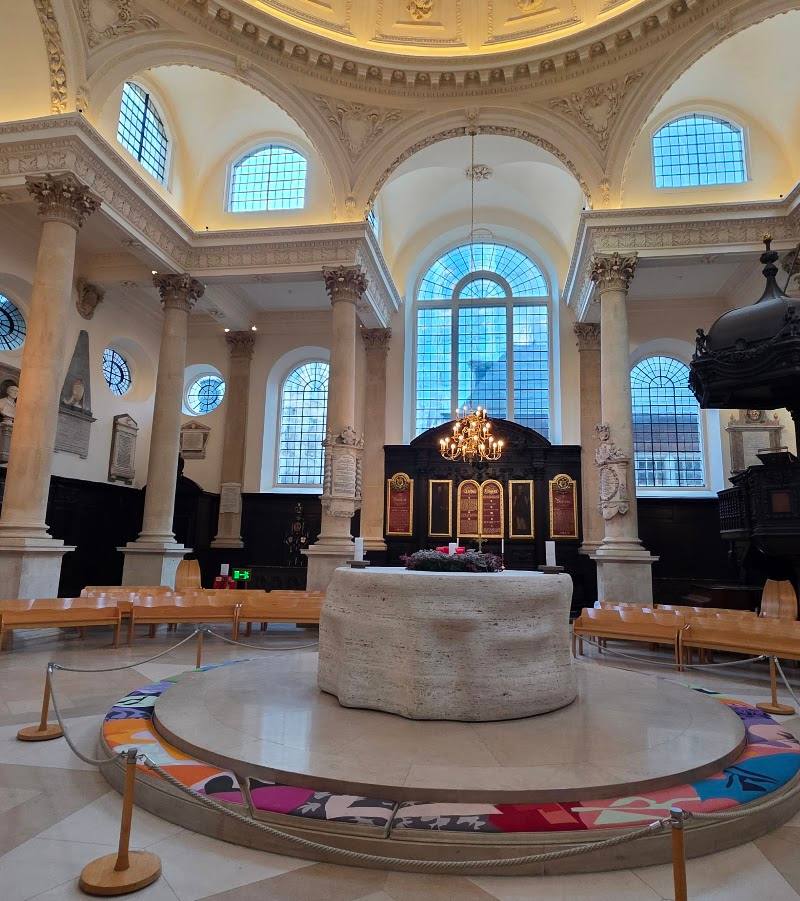
Notice the compact square plan, the clustered columns and the decorated pulpit described in the supplied historical account.
About 1 hour
Find the railway-era entrance details
The supplied account describes a former entrance associated with the construction of Bank station on the church’s south side, including sculpted figures. Check what is visible during your visit.
Look for John Newton’s memorial
The church’s history includes John Newton, rector from 1780 to 1807 and writer of the words to ‘Amazing Grace’. A memorial to him is described inside.
Make a day of it
Quick escape · About 1 hour
A short look inside
- 01
Check that the church is open to visitors before setting out.
- 02
Explore the interior and notice the columns, pulpit and memorials.
- 03
Look for the former underground-station entrance described on the south side of the church.
Verified history
A church has stood on this site since at least 1191, according to the supplied historical account. The present building was designed by Nicholas Hawksmoor and constructed from 1716 to 1724. John Newton served as rector from 1780 to 1807; the account identifies him as the writer of the words to ‘Amazing Grace’. When the City and South London Railway built Bank station between 1897 and 1900, the church faced demolition. It was saved, while its crypt was sold to the railway. The same account says the church survived the Second World War undamaged.
Hidden details
A church site with Roman remains — The supplied account says Roman remains were excavated during rebuilding in the early 18th century, though it does not identify what the remains were.
A railway connection on the church’s south side — Look for the former entrance associated with the railway works, described in the historical account as having sculpted figures representing electricity and Hermes.
When to go
· During confirmed visitor opening hours; check before travelling.
The supplied sources do not identify a particular season as best. Access and opening hours are more relevant than season for this indoor heritage visit.
The main visit is indoors. Check opening and access before setting out.
Worth pairing with
London’s Postal Footsteps walking tour
The Postal Museum lists a guided walking tour that meets outside St Mary Woolnoth and explores London’s postal history. Booking is required; check the museum’s current dates and details.
What to look for
- 01
Notice the compact, square interior, clustered columns, ornate pulpit and the former underground-station entrance on the south side. The supplied historical account also describes sculpted figures at that entrance and a memorial to John Newton inside
- 02
confirm what is accessible on the day.
The story
Industry, Literature
Best time to go
Any time of year; check opening before setting out.
Visit during the church’s stated weekday opening hours; check current access before travelling. A bright morning may help reveal the interior details, but this is not confirmed as a formal viewing recommendation.
How long to spend
Under 1 hour
Perfect for
Solo · Couples · History lovers · Walkers
Before you go
Address
Website
Listed hours
- Monday: 7am-4pm
- Tuesday: 7am-4pm
- Wednesday: 7am-4pm
- Thursday: 7am-4pm, 6:30-8pm
- Friday: 7am-2pm
- Saturday: Closed
- Sunday: 9:45-11:30am
Check before visiting.
Google rating
Practical information
Opening & access
The church’s listing says it is open Monday–Friday, 7am–3pm, with other opening times possible. Check before visiting, as access may vary for services or other events.
Check before visiting
Parking
Check before visiting.
Check before visiting
Toilets
A toilet is listed in the supplied venue information; check availability before visiting.
Check before visiting
Food & drink
The church’s listing mentions Newton’s Coffee. Check current opening and availability before visiting.
Check before visiting
Dogs
Check before visiting.
Check before visiting
Accessibility
Accessibility details are not sufficiently verified. Check before visiting.
Check before visiting
Cost
Check before visiting.
Check before visiting
Gallery
Place photographsKeep exploring
Around St Mary Woolnoth (IMPRINT Church London)
Within 50 km · approximate straight-line distances