Near the summit of Parliament Hill, Hampstead Heath, London NW3 2SP
Hampstead Heath Tumulus (Boadicea’s Grave)
Prehistoric
Place photograph
4.4
Wildland
Under 1 hour
Time
Check
Cost
Atmospheric
Feel
Why it's Wildland
4.4A Bronze Age burial mound with a Roman-era queen’s name attached by local legend.
This is a compact but unusually evocative encounter with deep prehistory: a rare bell barrow survives near the summit of Parliament Hill, while the story of Boudica’s grave remains a legend rather than established history.
Atmospheric · Ancient-feeling
Find your way
Open mapNear the summit of Parliament Hill, Hampstead Heath, London NW3 2SP
Opening map…
Know this place a little better?
The experience
A brief heritage stop on Hampstead Heath: look for the mound’s broad, low profile and consider how a prehistoric burial monument came to be identified in local folklore with Boudica.
Things to do
See the bell barrow
Look for the roughly circular mound, recorded as about 36 metres across and up to 3 metres high. Historic England identifies it as a bell barrow near the summit of Parliament Hill.
Under 1 hour
Separate the monument from its legend
The name “Boadicea’s Grave” comes from local tradition. The supplied heritage record identifies the mound as a Bronze Age bell barrow; it does not establish that Boudica was buried here.
A few minutes
Make a day of it
Quick escape · Under 1 hour
A short prehistoric landmark stop
- 01
Check current Hampstead Heath access guidance before visiting.
- 02
Find the scheduled monument near the summit of Parliament Hill.
- 03
Observe the mound and its surrounding earthwork from an appropriate path; do not climb on or disturb it.
Verified history
Historic England records the site as a scheduled bell barrow near the summit of Parliament Hill, south of Highgate Ponds. The mound is roughly circular, about 36 metres in diameter and up to 3 metres high, with a surrounding platform and quarry ditch. Antiquarian William Stukeley depicted it in a drawing dated 1725. Charles Read partially excavated it in 1894 and recovered pieces of charcoal; he suggested any burial might have decomposed in the acidic soil. The monument was first listed on 12 January 1965. Historic England describes bell barrows as Early or Middle Bronze Age funerary monuments, with most examples dating to 1500–1100 BC.
Folklore & legend
Local tradition calls the mound “Boadicea’s Grave” and associates it with Boudica, queen of the Iceni, who led an uprising against Roman forces around AD 60. This is folklore: the supplied heritage record does not verify that she was buried here.
Hidden details
The mound has a substantial surrounding earthwork — Historic England records a platform around the mound and an outer quarry ditch, from which material was taken to construct it.
A modern path crosses into the scheduled monument — The official entry notes that a modern path impinges on the monument; the ground beneath the path remains included in the scheduled area.
When to go
· No source-backed recommendation.
The supplied sources do not identify seasonal changes that materially affect a visit to the monument.
Weather and ground conditions are not specified in the supplied research. Check conditions before visiting.
Worth pairing with
Parliament Hill
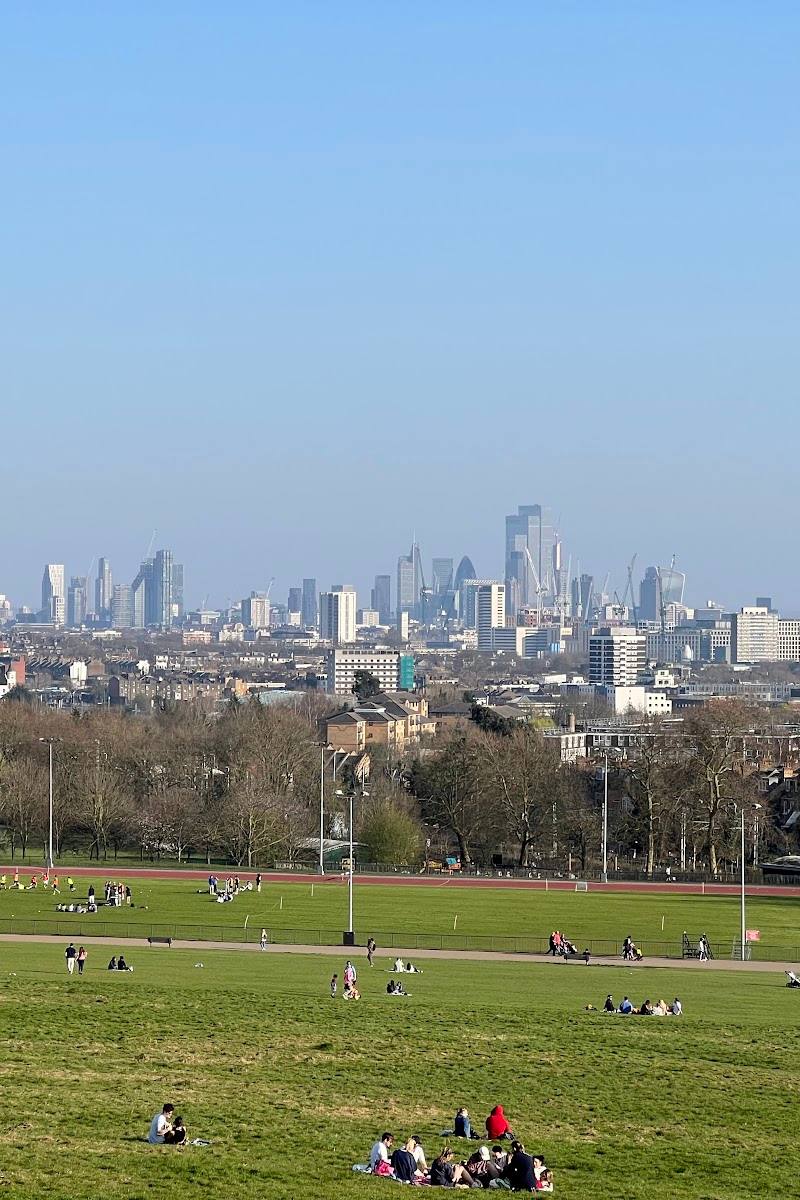
The barrow is near the summit of Parliament Hill. The supplied Hampstead Heath history guide describes the hill as a viewpoint over London; treat this as a separate stop rather than an implied route.
Kenwood House
A possible separate Hampstead Heath heritage visit. The supplied history guide describes the house and its grounds, but check current visitor information before planning.
What to look for
Look for the roughly circular mound, its broad surrounding platform and the modern path that impinges on the scheduled monument. Do not treat the Boudica story as proven history.
The story
Archaeology, Folklore & legend
Best time to go
Year-round; the source material does not identify a season that is best for visiting the mound.
No source-backed best time of day is available. Check current Heath guidance before setting out.
How long to spend
Under 1 hour
Perfect for
History lovers · Walkers
Before you go
Practical information
Opening & access
The scheduled monument is on Hampstead Heath, but the supplied sources do not verify access arrangements specifically at the mound. Check current Heath guidance and view it without climbing on or disturbing the monument. Access arrangements are unconfirmed. Check before visiting; do not enter private land or restricted structures.
Check before visiting
Parking
Parking information not verified. Check before visiting.
Check before visiting
Toilets
Check before visiting.
Check before visiting
Food & drink
Food and café options at the mound are not verified. Check before visiting.
Check before visiting
Dogs
Check current Hampstead Heath dog guidance before visiting.
Check before visiting
Accessibility
Step-free access and path conditions at the mound are not verified. Check before visiting.
Check before visiting
Cost
Check before visiting.
Check before visiting
Gallery
Place photographsKeep exploring
Around Hampstead Heath Tumulus (Boadicea’s Grave)
Within 50 km · approximate straight-line distances