Friars Wash, near Redbourn, Hertfordshire
Friars Wash Roman Temple Site
Roman
Source image
3.4
Wildland
Under 1 hour
Time
Check
Cost
Atmospheric
Feel
Why it's Wildland
3.4Aerial photographs first revealed unusual features at Friars Wash: excavation later identified a pair of Romano-British temples, a possible shrine and a broader complex of ditches and structures.
Friars Wash has a substantial archaeological story, including an unusually arranged pair of Roman temples, but the evidence describes excavated, mostly subsurface remains rather than a confirmed visitor attraction. Its value is strongest for understanding the landscape and archaeology, not for an assumed on-site walk.
Atmospheric
Find your way
Open mapFriars Wash, near Redbourn, Hertfordshire
Opening map…
Know this place a little better?
The experience
An archaeology-led place to learn about a Roman religious complex, rather than a confirmed walkable ruin. Public access is unverified, so treat this as a research-led listing and check permission before travelling.
Things to do
Explore the excavation findings
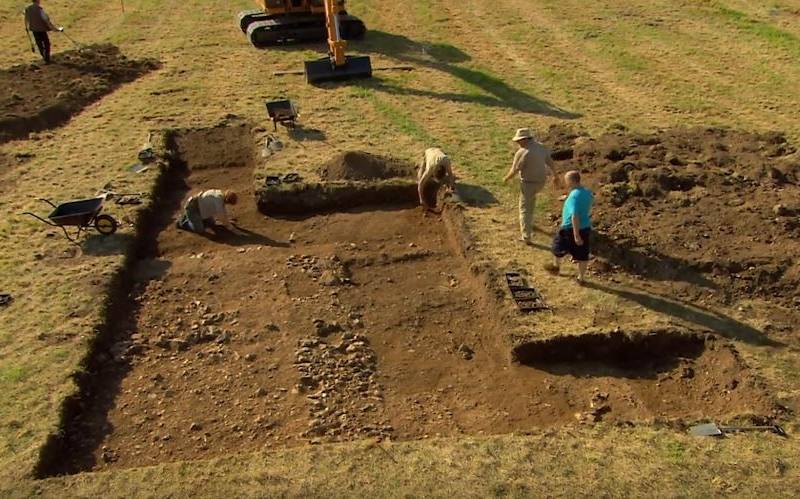
Read how aerial photography, geophysical survey and four evaluation trenches helped identify two Romano-British temples, a possible shrine and associated ditches. The described remains are archaeological findings; their visibility from any public place is not established.
30–60 minutes
Follow the aerial-photograph discovery
Trace the investigation’s story from remains noticed during ploughing in 1965, through aerial photography in 1976, to later archaeological evaluation. This is a research activity; access to the field is not confirmed.
20–40 minutes
Make a day of it
Quick escape · About 30–60 minutes
Read the Roman site’s story
- 01
Read Wessex Archaeology’s account of the Friars Wash evaluation before setting out.
- 02
Treat the listed location as a site reference, not as confirmation of a public entrance.
- 03
Do not enter fields or archaeological land without confirmed permission.
Verified history
Wessex Archaeology reports that archaeological remains were first noted in 1965, when building foundations were ploughed up. An aerial photograph from 1976 showed an apparently multi-period site, including ditches and two rectangular structures thought to be Romano-British temples. A later evaluation used geophysical survey and four trenches. Finds from a metalled surface suggest a late first- or second-century AD construction date for one structure, with activity continuing into the late fourth century AD. The excavators identified a pair of temples with central cellae and surrounding ambulatories; a circular building may have been a temple or shrine. The report says the remains were generally well preserved below ground, although affected to some extent by ploughing.
Hidden details
A pair of temples with shared layout — The archaeological report describes two rectangular temples, each with a central cella and an outer ambulatory; the ambulatories were separated by a shared dividing wall.
A circular possible shrine — A circular structure found in a separate trench was considered possibly to be a temple or shrine. A central flint-and-chalk footing was interpreted as a likely base for a plinth.
A Roman site beside a major route — Wessex Archaeology places the site in the hinterland of Verulamium and near the assumed line of Watling Street, the Roman road between London and Wroxeter.
When to go
· No visitor timing information verified.
The supplied sources establish archaeological significance but provide no evidence of seasonal access or a best time to visit.
Visitor access, paths and site conditions are not confirmed. Check before visiting.
What to look for
- 01
The published archaeological account describes two rectangular temples, each with a central cella and surrounding ambulatory
- 02
a possible third cella or ancillary building
- 03
a circular structure interpreted as a possible temple or shrine
- 04
and a system of ditches. These are excavation findings, not confirmed features visible to visitors today.
The story
Roman archaeology
Best time to go
No season-specific visitor information available. Check access before making a visit.
No visitor season or time of day is verified. Confirm access before planning a visit.
How long to spend
Under 1 hour
Perfect for
History lovers
Before you go
Practical information
Opening & access
Public access to the archaeological site is not confirmed. The recorded remains are largely below ground; do not enter fields or private land without permission. Check before visiting. Access arrangements are unconfirmed. Check before visiting; do not enter private land or restricted structures.
Check before visiting
Parking
Check before visiting
Check before visiting
Toilets
Check before visiting
Check before visiting
Food & drink
Check before visiting
Check before visiting
Dogs
Check before visiting
Check before visiting
Accessibility
Visitor access, paths and facilities are not confirmed. Check before visiting.
Check before visiting
Cost
Check before visiting
Check before visiting
Water
None verified
Gallery
Place photographsKeep exploring
Around Friars Wash Roman Temple Site
Within 50 km · approximate straight-line distances