7.5
Wildland
1–2 hours
Time
Check
Cost
Atmospheric
Feel
Why it's Wildland
7.5Founded in 1131, Basingwerk was a Cistercian religious centre and a stopping point for pilgrims. Its surviving chapter house, parlour and monks’ dining hall still make the daily life of the abbey unusually legible.
Basingwerk earns its place through more than its standing ruins: the chapter-house benches, the monks’ parlour and the scale of the dining hall give the remains a strong sense of lived history. Its continuing link with pilgrimage adds a second layer to a visit.
Atmospheric · Ancient-feeling · Peaceful
Find your way
Open mapGreenfield, Holywell, Flintshire, Wales
Opening map…
Know this place a little better?
The experience
Explore the surviving monastic buildings, look for the chapter-house benches and parlour, and consider the abbey’s continuing place on the North Wales Pilgrim’s Way. Allow around 1–2 hours; a longer Greenfield Valley visit is possible, but check current park information before planning it.
Things to do
Find the chapter-house benches
Look for the surviving benches where monks sat for daily readings. They offer a tangible detail of the abbey’s communal religious life.
Step into the parlour
Notice the room beside the chapter house. Cadw describes it as the only place where monks, normally silent, were allowed to speak.
Pause in the monks’ dining hall
Visit the most impressive surviving room in the abbey, according to Cadw, and consider how its scale differs from the smaller rooms nearby.
Trace the pilgrimage connection
Basingwerk is the starting point of the North Wales Pilgrim’s Way, a route Cadw describes as stretching to Bardsey. Check current route information before setting out beyond the abbey.
Make a day of it
Quick escape · Around 1 hour
Read the ruins
- 01
Enter the abbey during Cadw’s stated visiting hours.
- 02
Find the chapter house and look for the remains of the monks’ reading benches.
- 03
Look for the adjoining parlour, where monks were permitted to speak.
- 04
Finish at the monks’ dining hall, identified by Cadw as the most impressive surviving room.
Half day · Allow 1–2 hours at the abbey; check local route details before extending the visit
Abbey and pilgrimage
- 01
Explore the surviving abbey rooms, taking time to notice how their uses differed.
- 02
Use the chapter house, parlour and dining hall to picture the routines of the monastic community.
- 03
Reflect on Basingwerk’s role as the starting point of the North Wales Pilgrim’s Way, which Cadw says continues to Bardsey.
- 04
If you plan to walk beyond the abbey, check current route information and access conditions first.
Verified history
Cadw dates Basingwerk Abbey’s foundation to 1131 and says it was extensively remodelled in the 13th century as part of a network of Cistercian settlements. The surviving remains include the 12th-century chapter house, with benches used for daily readings, an adjoining parlour where monks could speak, and a monks’ dining hall. The abbey remains a religious site and is the starting point of the North Wales Pilgrim’s Way, which Cadw says runs to Bardsey.
Folklore & legend
A modern walking-video source recounts a local legend about a monk who listened to a nightingale and returned to find centuries had passed. Treat this as folklore, not verified abbey history.
Hidden details
The chapter-house seating — Look for the remains of the benches where monks sat for daily readings.
The speaking room — The parlour was the place where monks—otherwise usually silent—were allowed to speak.
Historic thresholds — Cadw warns that low-level historic thresholds may cause a trip hazard. Watch your footing while exploring.
When to go
· During reasonable daylight hours; Cadw does not specify a preferred time of day.
Cadw lists the abbey as open all year during reasonable daylight hours. No season-specific feature is established in the supplied sources.
Cadw notes that ancient monuments can be affected by dislodged stones in bad weather and identifies historic thresholds as trip hazards. Take care underfoot and check current visitor guidance.
Worth pairing with
North Wales Pilgrim’s Way
Basingwerk Abbey is the route’s starting point. Check current route information, access and walking details before planning a longer outing.
What to look for
- 01
The remains of the chapter-house benches
- 02
the parlour beside it
- 03
the monks’ dining hall
- 04
low historic thresholds underfoot.
The story
Saints & pilgrimage, Archaeology
Best time to go
Open all year during reasonable daylight hours, according to Cadw. A dry day may make it easier to explore the grassy, uneven historic ground.
Cadw lists the site as open during reasonable daylight hours throughout the year. Choose a dry spell if you want to spend time crossing the historic ground.
How long to spend
1–2 hours
Perfect for
History lovers · Walkers · Photographers
Before you go
Address
Phone
Website
Google rating
Practical information
Opening & access
Cadw says the abbey is open all year during reasonable daylight hours. Free visitor car parking is available. The site is relatively level, though the approach from the appointed car park includes a short, steep path and historic thresholds may be trip hazards. Check Cadw for current visitor information before travelling.
Check before visiting
Parking
Cadw lists free visitor car parking. Its guidance describes a short, steep path from the appointed car park to the main gate.
Toilets
Check before visiting
Check before visiting
Food & drink
Check before visiting
Check before visiting
Dogs
Dogs are welcome on short leads and may access ground-floor levels of the site.
Accessibility
Cadw classifies the terrain as Level 1 – Accessible and lists wheelchair-accessible facilities in the source information. The approach from the appointed car park is short but steep; historic thresholds may present trip hazards. Check with Cadw about your specific access needs.
Check before visiting
Cost
Check before visiting
Check before visiting
Water
Check before visiting
Check before visiting
Gallery
Place photographs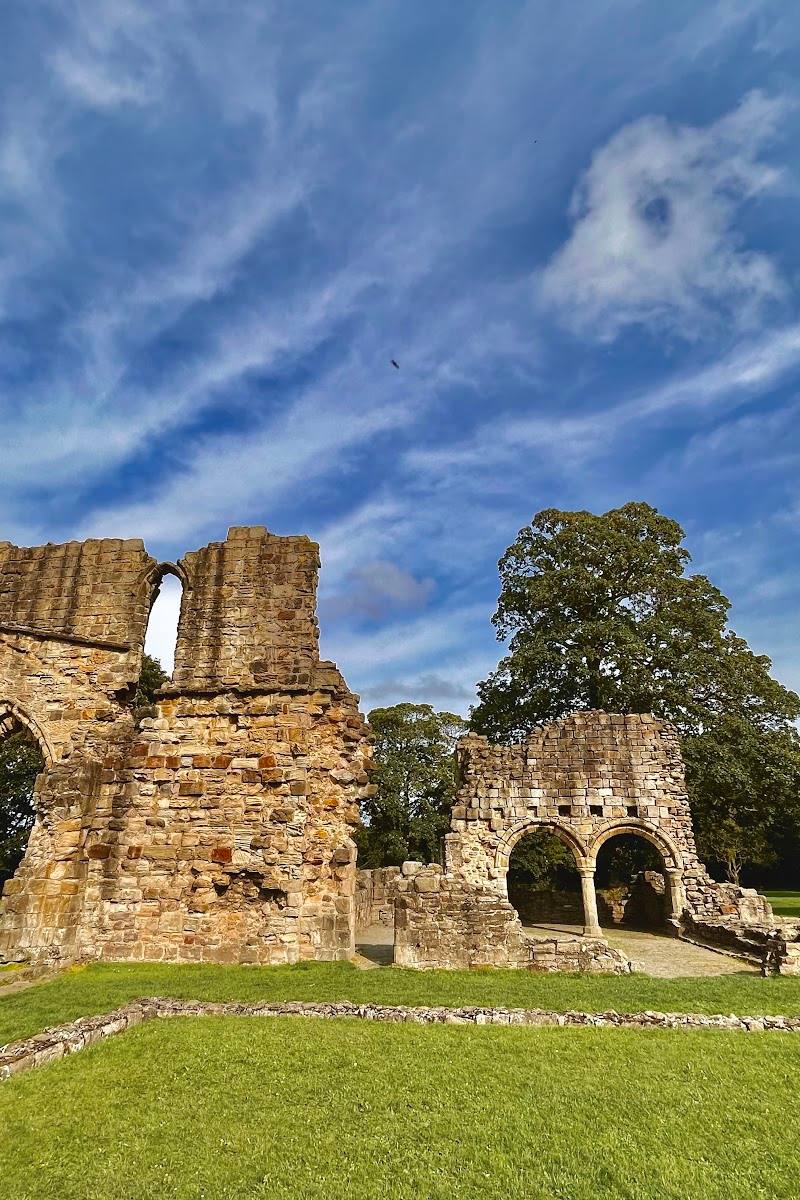
Keep exploring
Around Basingwerk Abbey
Within 50 km · approximate straight-line distances