Long Rake, near Monyash, Derbyshire DE45 1JS
Arbor Low Stone Circle and Gib Hill Barrow
Prehistoric
Place photograph
8.2
Wildland
1–2 hours
Time
Paid
Cost
Atmospheric
Feel
Why it's Wildland
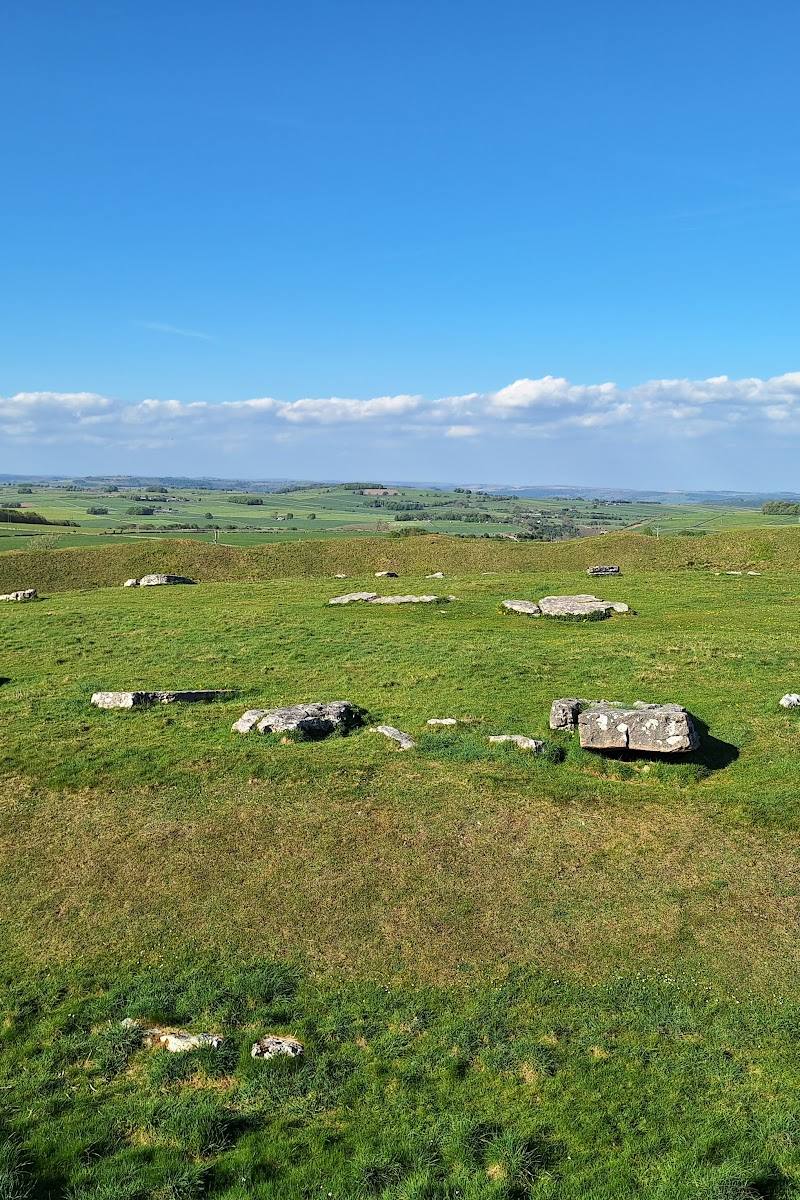
8.2A ring of fallen limestone stones sits inside a substantial prehistoric henge, with the separate burial mound of Gib Hill a short walk away.
Arbor Low is more than a stone circle: its fallen limestone ring, central cove, enclosing earthworks and nearby layered burial mound make a remarkable prehistoric landscape. The approach crosses working farmland, so check access arrangements and be prepared for uneven ground.
Atmospheric · Ancient-feeling · Big-sky
Find your way
Open mapLong Rake, near Monyash, Derbyshire DE45 1JS
Opening map…
Know this place a little better?
The experience
Allow time to take in both monuments. From the small parking area, walk about 300 metres through farmland to Arbor Low, examine the fallen stones, central cove and enclosing bank and ditch, then continue to Gib Hill, around 350 metres away according to History Hit. The route crosses uneven fields and may involve gates or stiles.
Things to do
Read the shape of the henge
Take in the substantial enclosing bank and ditch around the stone circle, and note the entrance points described by History Hit.
15–25 minutes
Look into the central cove
The fallen limestone circle surrounds a smaller central group of stones known as the cove; English Heritage notes that this feature is found only at major sacred sites.
10–15 minutes
Continue to Gib Hill
Visit the nearby burial mound. History Hit describes it as two mounds built at different times, whose ridges can still be distinguished.
20–30 minutes, excluding the walk between monuments
Make a day of it
Quick escape · Allow around 1 hour; this is a suggested visit plan, not a verified site-duration estimate.
Quick escape: circle and cove
- 01
Use the small parking area on the track to Upper Oldhams Farm, checking current arrangements before travel.
- 02
Walk about 300 metres through fields to Arbor Low; expect gates or stiles and uneven surfaces.
- 03
Take time to look around the fallen stone circle, central cove and enclosing earthworks.
- 04
Return the same way, observing the landowner’s £1-per-person access charge.
Half day · Half day, allowing time to explore both monuments and travel between them.
Half day: Arbor Low and Gib Hill
- 01
Visit Arbor Low during daylight hours, allowing for the 300-metre field approach.
- 02
Look closely at the fallen limestone stones, central cove, bank and ditch.
- 03
Continue to Gib Hill; History Hit places it approximately 350 metres from Arbor Low.
- 04
Return to the parking area by the same approach. Check the route on site and allow for uneven ground.
Verified history
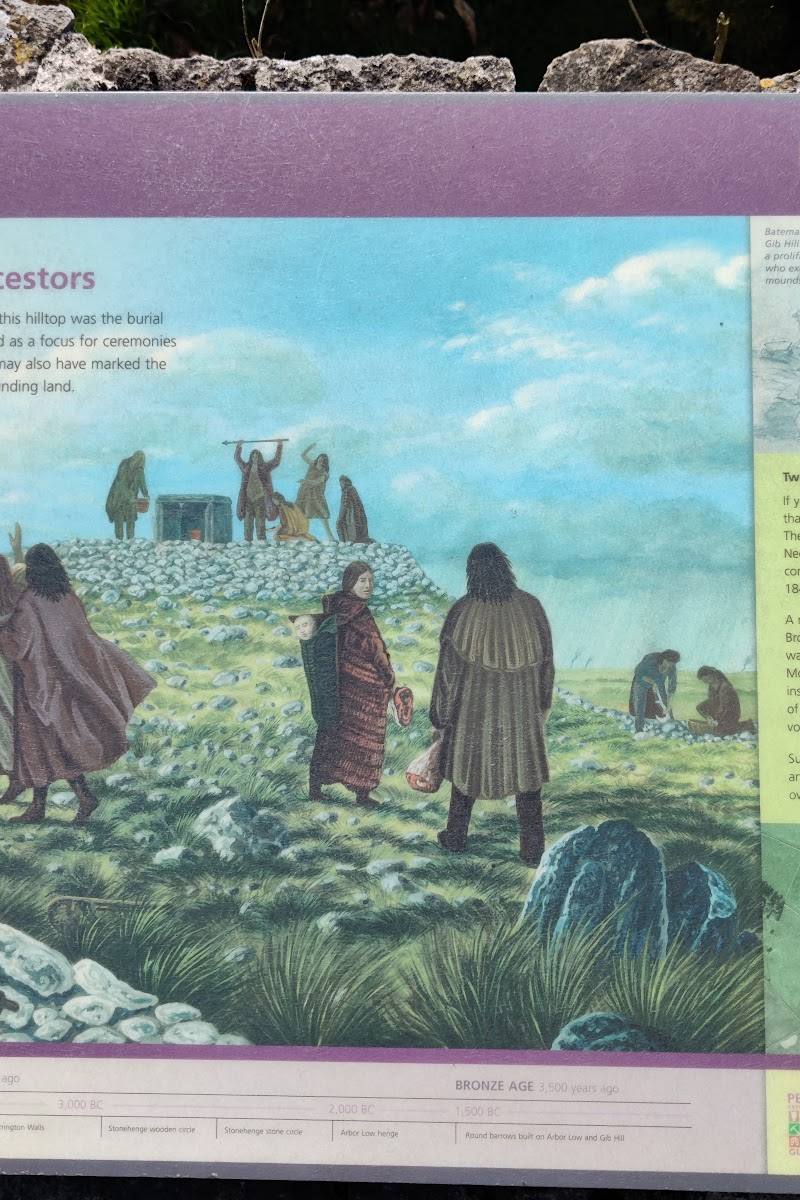
English Heritage describes Arbor Low as a Neolithic henge and identifies it as the most important prehistoric site in the East Midlands. Its account describes around 50 fallen white limestone slabs around a central cove, enclosed by an earthen bank and ditch, with the burial mound of Gib Hill nearby. History Hit reports that Gib Hill comprises two mounds built at different times and that their ridges remain distinguishable. The supplied sources do not settle the monuments’ precise chronology or purpose.
Hidden details
A cove inside the circle — The smaller central stones form a feature English Heritage calls a cove, noted as unusual among major sacred sites.
Two mounds at Gib Hill — History Hit describes two distinguishable mound ridges, representing structures built at different times.
When to go
· Daylight hours; the supplied sources do not establish a more specific best time.
No season-specific visitor advice is established by the supplied sources.
The approach crosses fields and has uneven surfaces. Check conditions and access arrangements before visiting.
Worth pairing with
Nine Ladies Stone Circle
English Heritage suggests continuing to this nearby prehistoric site, six miles east of Arbor Low.
Hob Hurst’s House
English Heritage identifies this burial chamber as a further prehistoric stop, three miles beyond Nine Ladies.
Peveril Castle
English Heritage suggests this as a possible extension to a day out; it is a separate hillside castle visit in Castleton.
What to look for
At Arbor Low, notice the fallen limestone slabs, the smaller stones of the central cove, and the enclosing bank and ditch. At Gib Hill, look for the distinguishable ridges of its two mounds.
The story
Prehistoric archaeology; Neolithic henge and stone circle, with nearby burial mounds.
Best time to go
Check conditions before visiting; the site is open during daylight hours.
The supplied sources do not identify a best season or time of day. Visit during daylight hours and check access conditions before setting out.
How long to spend
1–2 hours
Perfect for
History lovers · Walkers · Photographers
Before you go
Address
Phone
Website
Listed hours
- Monday: 9am-5pm
- Tuesday: 9am-5pm
- Wednesday: 9am-5pm
- Thursday: 9am-5pm
- Friday: 9am-5pm
- Saturday: 9am-5pm
- Sunday: 9am-5pm
Check before visiting.
Google rating
Practical information
Opening & access
Open during daylight hours. Access is across private land through a working farm; the landowner charges £1 per person. From the small parking area, it is a 300-metre walk through fields, using gates or stiles.
Parking
English Heritage describes a small parking area on the track to Upper Oldhams Farm. Check current parking arrangements before travelling.
Check before visiting
Toilets
No facilities on site. English Heritage identifies the nearest public toilets at Parsley Hay, just over a mile west.
Food & drink
No café on site. English Heritage identifies a café at Parsley Hay, just over a mile west.
Dogs
Dogs on leads are welcome and must be kept under close control because livestock may be present.
Accessibility
The 300-metre approach crosses fields and includes gates or stiles. English Heritage says this can be challenging for wheelchair users and people with buggies; its page identifies uneven surfaces.
Cost
Paid
Gallery
Place photographs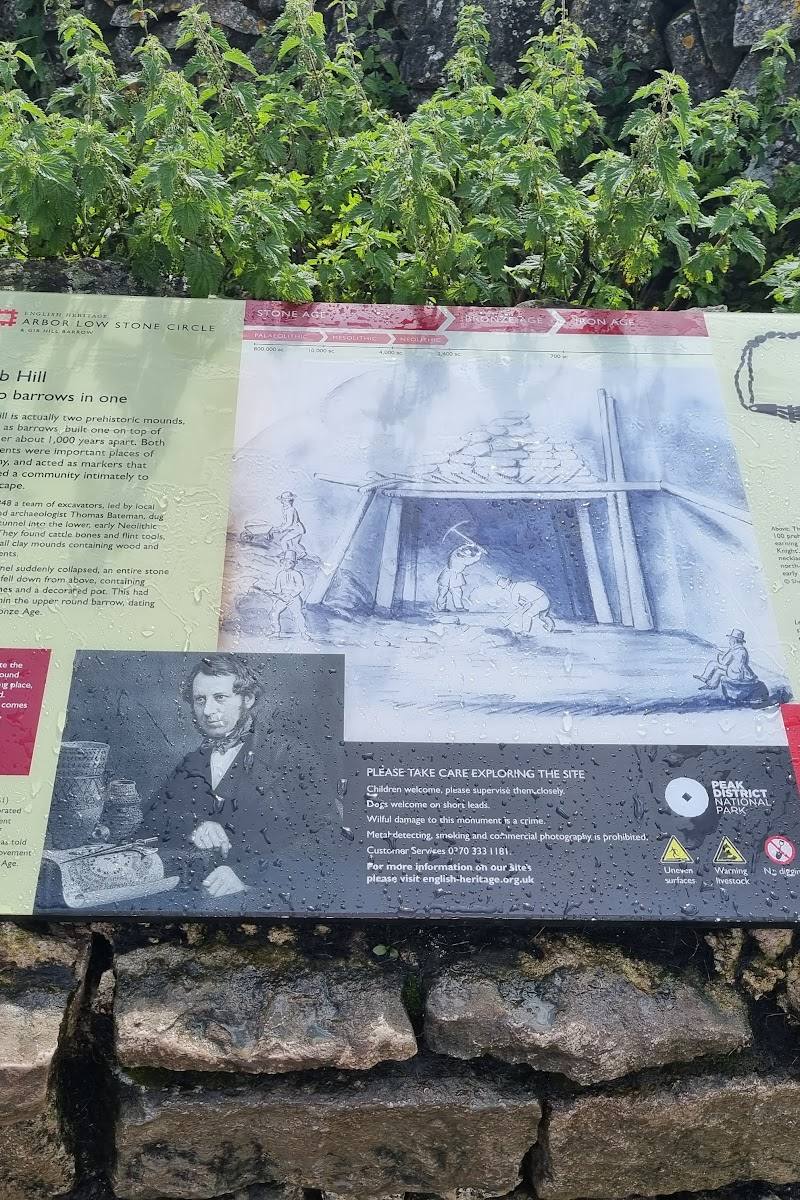
Keep exploring
Around Arbor Low Stone Circle and Gib Hill Barrow
Within 50 km · approximate straight-line distances
 Place photograph5.4
Chatsworth Farmyard & Adventure Playground
Chatsworth House, Bakewell, Derbyshire DE45 1PP
12.3 km away
 Place photograph5.4
Moorland View Farm
Staffordshire Moorlands, near Leek and the Peak District
15.5 km away