Near Mybster, Caithness, Scotland
Achanarras Quarry
Unusual place
Place photograph
7.8
Wildland
1–2 hours
Time
Check
Cost
Peaceful
Feel
Why it's Wildland
7.8Sixteen species of fossil fish, preserved where a huge lake covered Caithness 380 million years ago.
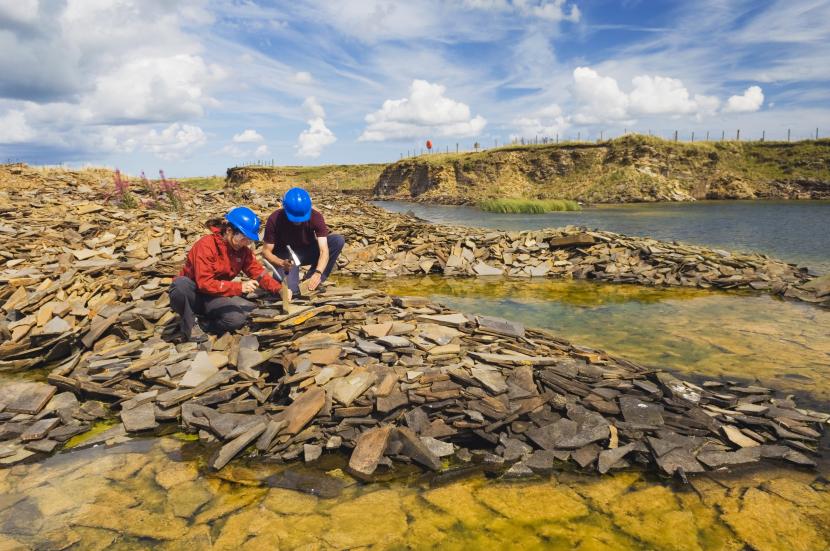
The quarry’s strongest feature is not its scenery but what its stone contains. An internationally important fossil-fish locality, reached by a short track walk, makes an unusually tangible encounter with deep time.
Peaceful · Quirky
Find your way
Open mapNear Mybster, Caithness, Scotland
Opening map…
The experience
Walk up from the car park, start with the shelter’s illustrated panels, then look at the flagstone quarry with its ancient lake story in mind. Make this a photography-and-observation visit unless you have checked the current collecting rules. Allow a suggested 1–2 hours for the return walk and interpretation.
Things to do
Walk the quarry approach
Follow the track from the signed parking area to the quarry, approximately 1km each way. This is a straightforward out-and-back plan, not a sourced circular route.
Meet the Devonian fish on the interpretation panels
Start at the shelter, where illustrated panels explain the fossils and the site's significance. They provide a reliable way to appreciate the fish fauna without needing to find or remove a specimen.
Look at the flagstone without collecting
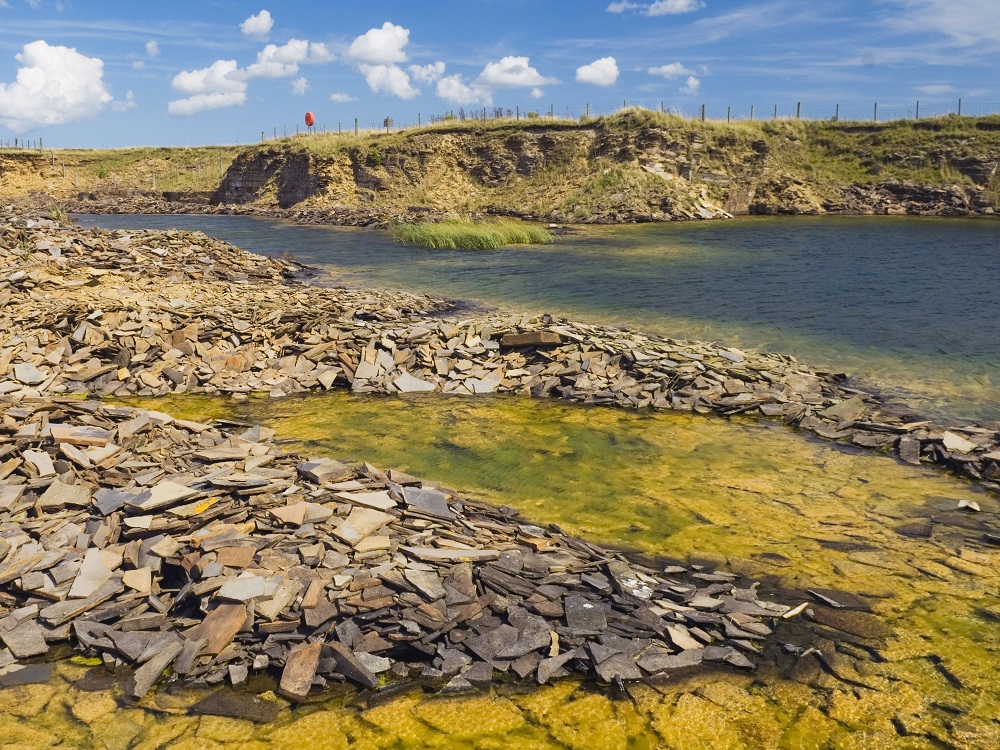
Study the quarry material as the physical record of an ancient lake. Do not split, move or remove material as part of this suggested visit. The SSSI protects the geological features; any collecting must follow the current site-specific rules.
Make a day of it
Quick escape · Suggested 1–2 hours
Quick escape: read the ancient lake
- 01
Use the signed car park off the B870 and read the site notice board.
- 02
Follow the approximately 1km track to the quarry, leaving gates as found.
- 03
Visit the shelter and use its fossil illustrations to understand the former lake and its fish.
- 04
Observe and photograph the quarry without disturbing material, then return along the approach track. Read NatureScot’s current guidance before considering any collecting.
Verified history
About 380 million years ago, a huge lake covered this part of Caithness. The former quarry exposed a remarkably varied Middle Devonian fish fauna, described in scientific literature since 1889. Scottish Geology Trust records sixteen species representing fifteen genera and at least ten orders—the most diverse species list among equivalent Scottish Achanarras-horizon exposures. It is the type locality for Palaeospondylus gunni and Rhamphodopsis threiplandi: a place central to the scientific description of those species. NatureScot now owns and manages the reserve, whose fossil-bearing features are protected as an SSSI.
Hidden details
Diversity matters more than a spectacular find — The site's importance lies partly in the breadth of its fish fauna: almost every vertebrate known from the Achanarras horizon occurs here. That scientific distinction is easy to miss when looking at an apparently modest quarry.
When to go
· Daylight; no particular hour is established by the sources.
NatureScot explicitly recommends visiting at any time of year. The source row favours spring and summer for better weather and drier ground.
Prefer dry conditions and wear boots for the uneven ground and sharp stone reported in the source row. The source row also reports no phone signal; do not rely on mobile reception.
What to look for
The fossil-fish illustrations in the shelter and the flagstone material that made the site famous. Sixteen fish species are recorded here, but a complete fossil is not a promised find.
The story
Science
Best time to go
Year-round; spring and summer for the drier-ground visit suggested by the source row.
NatureScot recommends any time of year. Choose daylight and preferably dry conditions for examining the stone and negotiating the uneven ground.
How long to spend
1–2 hours
Perfect for
Walkers · Photographers
Practical information
Opening & access
NatureScot welcomes visitors. Follow the signed approach from the B870, about 1km west of Mybster junction; the quarry is a further 1km walk from the car park. Leave gates as found. Visiting does not automatically authorise fossil collecting: read NatureScot’s current collecting guidance and access notice first.
Parking
Small parking area beside the site notice board, reached by a signed track from the B870. The quarry is approximately 1km farther along another track.
Toilets
The source row reports no nearby toilets. Check before visiting.
Check before visiting
Food & drink
No café or pub identified in the source row. Check before visiting.
Check before visiting
Dogs
The source row describes the site as dog-friendly; current restrictions are not supplied. Check before visiting.
Check before visiting
Accessibility
A roughly 1km track approach each way. The source row reports uneven ground, sharp edges and no wheelchair accessibility. NatureScot confirms a shelter and interpretation panels; check current access conditions before visiting.
Check before visiting
Cost
Check before visiting
Check before visiting
Gallery
Place photographs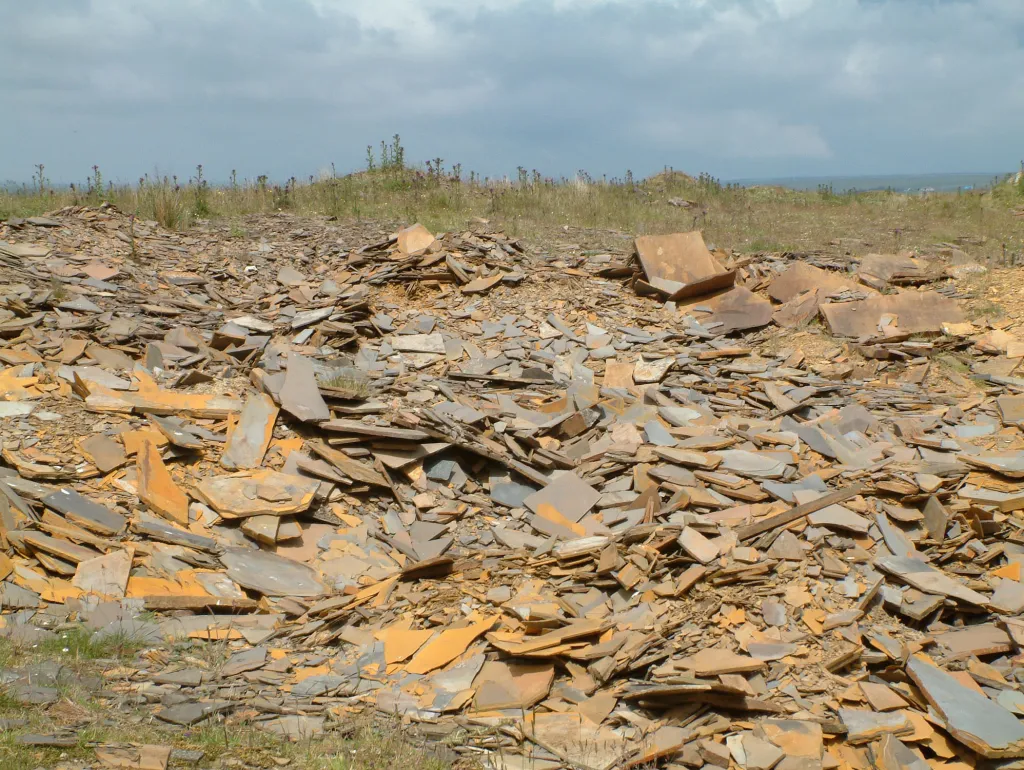
Keep exploring
Around Achanarras Quarry
Within 50 km · approximate straight-line distances
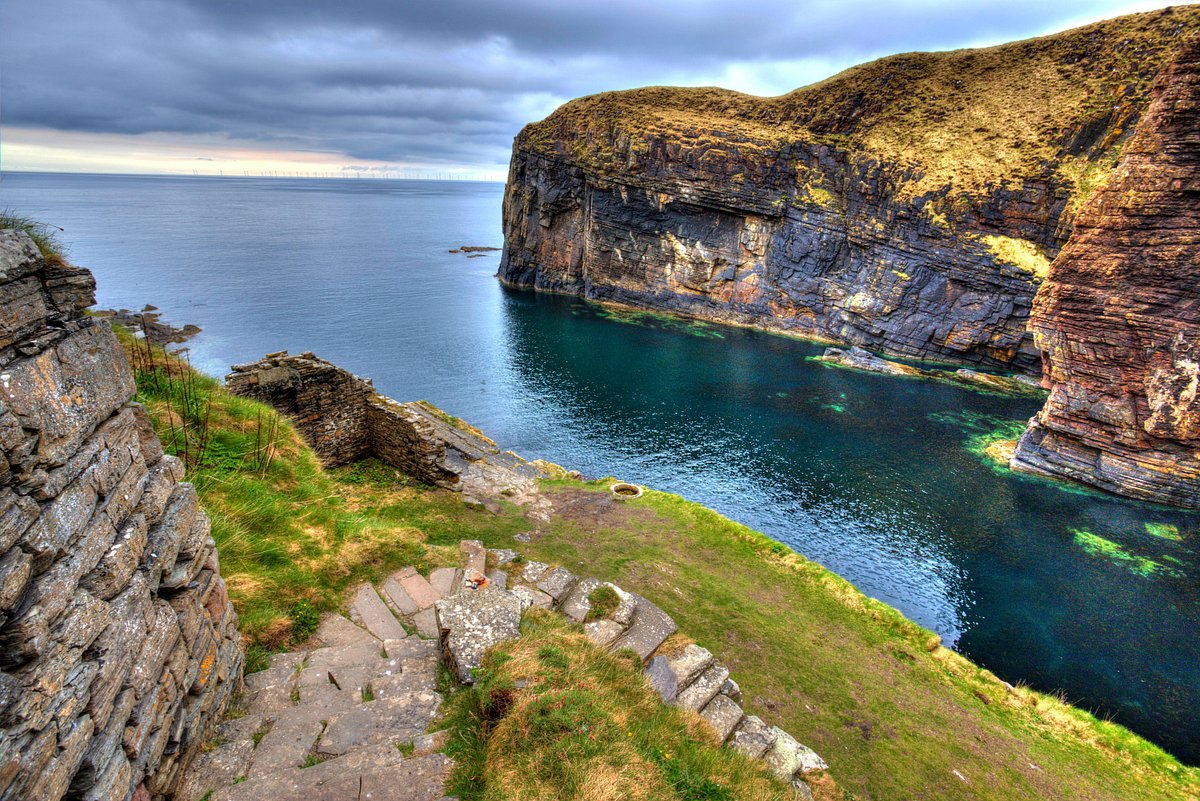 Place photograph8.8
Whaligoe Steps & Haven
Whaligoe, near Wick, Caithness, Highlands, Scotland
21.5 km away
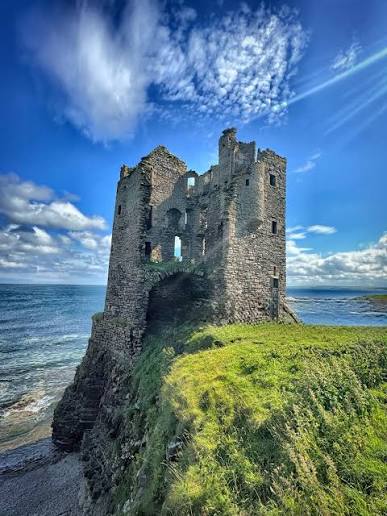
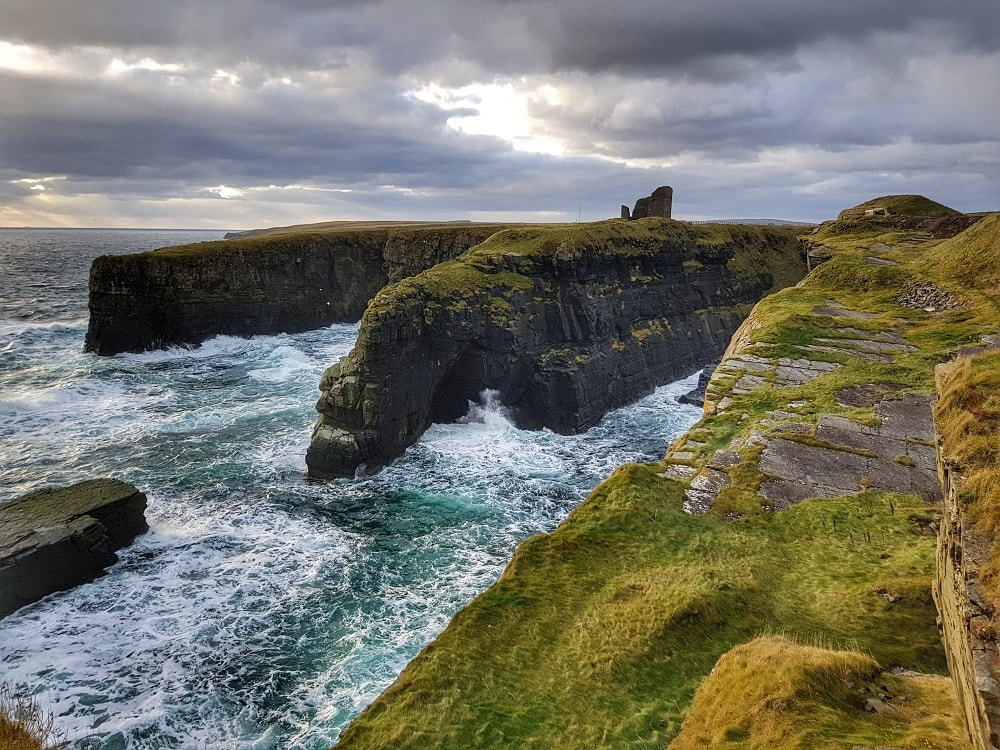 Place photograph8.1
Castle of Old Wick Sea Cliffs
Near Wick, Caithness, Highlands, Scotland
21.9 km away